Pergamenka: New life for historic industrial wasteland in Prague-Holešovice
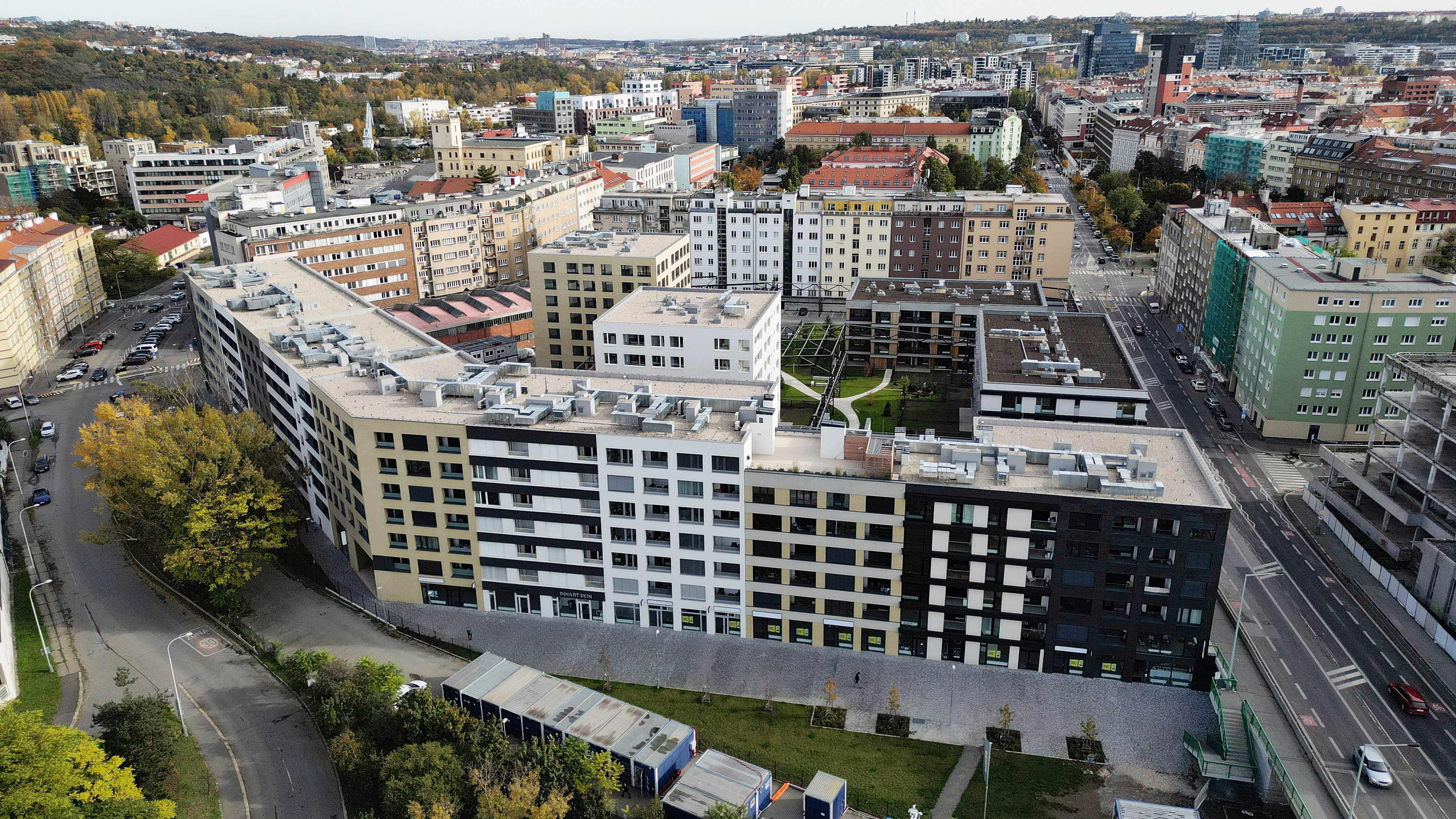
Feb 24, 2026 | The Pergamenka Residence in Prague’s Holešovice district features approximately 23,000 m² of RAKO ceramic tiles, used throughout both the apartments and the common areas of the residential complex.
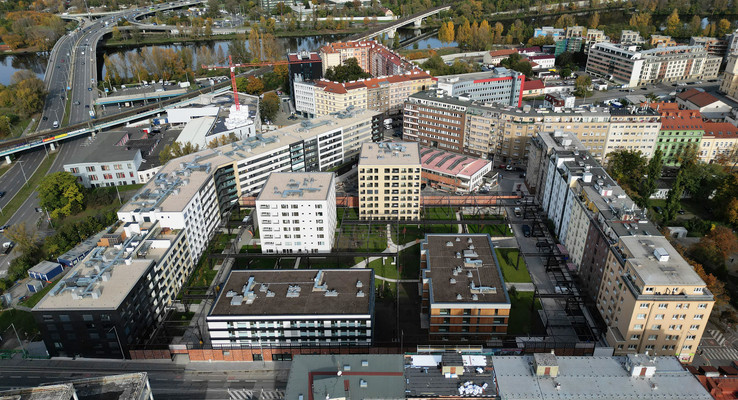
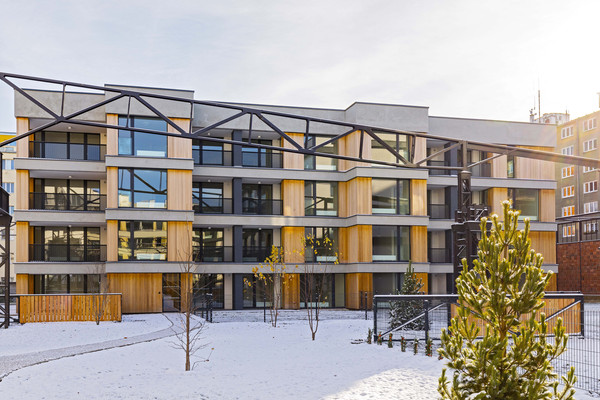
The former warehouse site in Holešovice, northeast of Prague’s Old Town, combines modern urban living with respect for the area’s industrial history. The Pergamenka project has transformed the former industrial site into a vibrant neighbourhood, becoming a blueprint for the sensitive revitalisation of brownfield sites close to Prague’s city centre.
A history that lives on
Holešovice has been an important industrial area since the second half of the 19th century. The unctionalist complex of former wholesale warehouses of the Ferra company (later Ferona) was built between 1928 and 1929 based on a design by architect Josef Kříž. The administrative building with its side warehouse and gatehouse is now a protected cultural monument – while the remaining parts of the complex awaited a new chapter.
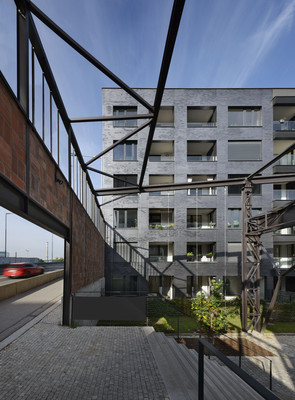
The architects decided not to erase the past, but to build upon it. “We definitely wanted to preserve the industrial elements. History gave us the musical staff, and we wrote a new melody into it,” says architect Prokop Tomášek from A69 – architekti.
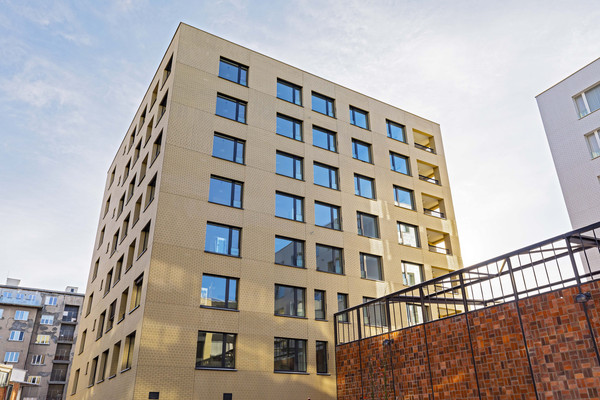
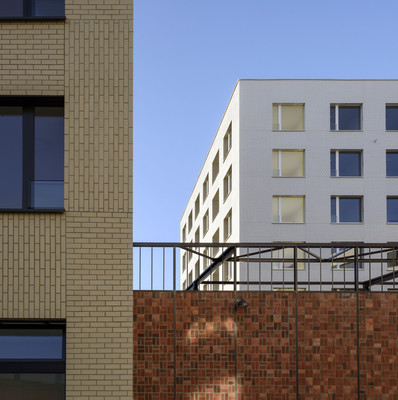
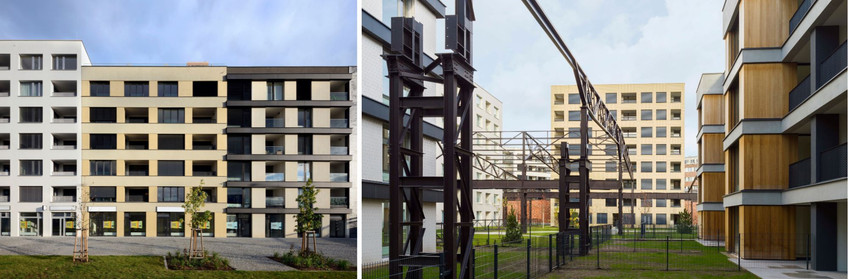
Preserved steel structures, replicas of the original hollow bricks, and the characteristic brick bonding now create an authentic framework for the new residential complex. Two walls of the original hall define the boundary of the site, and the refurbished steel structure has become the dominant feature of the new inner courtyard.
An Open Complex Connecting Living, Services, and Community Life
Pergamenka is not a closed project. The space is accessible 24/7, and authentic metal elements help with orientation as well as clearly defining the boundaries between public and community zones. The complex is divided into two parts – newly built residential buildings and the historic reception building, which will undergo renovation and will offer restaurants and shops.
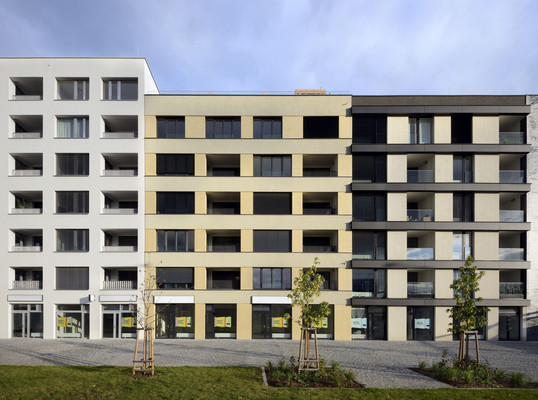
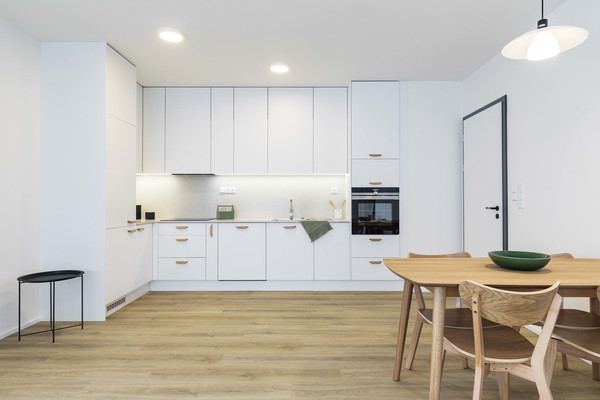
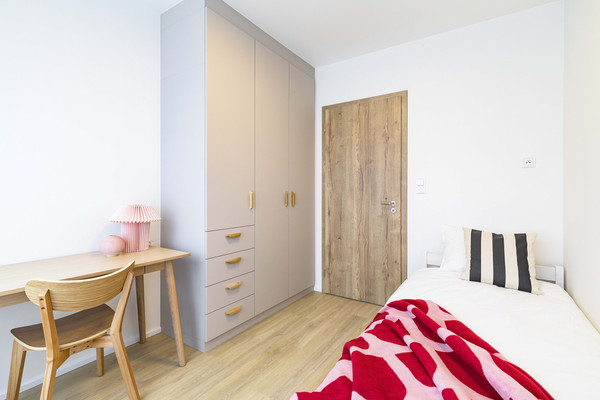
Part of the project was developed in cooperation with the residential fund Heimstaden and resulted in the Mozaika residence – a concept of modern rental housing. Flexible layouts, community spaces, gardens, and cafés create an environment where people can meet naturally. The apartments are designed for both individuals and families and respond to current demands for flexible living. Each residential unit has been designed individually, with emphasis on functionality, simplicity, and the long-term sustainability of the solutions. The project builds on the original industrial character of the site while at the same time adding a new residential layer to it.
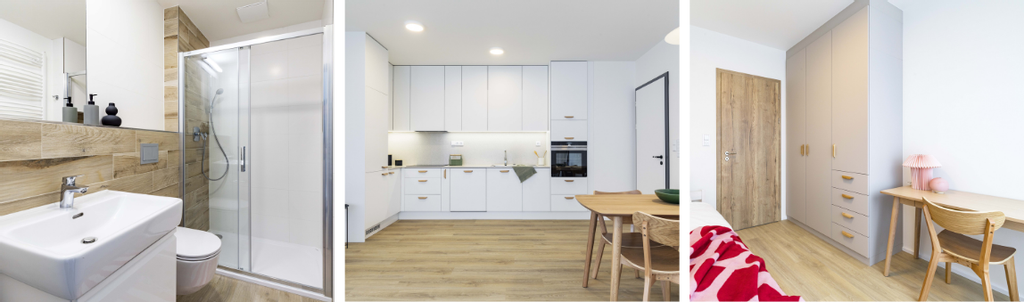
RAKO: Part of the Architectural Solution
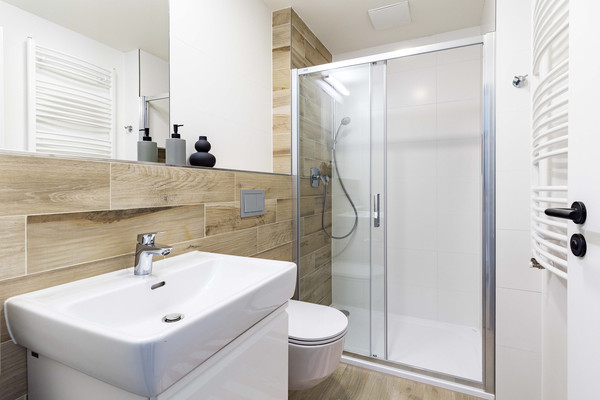
Approximately 23,000 m² of RAKO ceramic tiles were used in the implementation of the project as part of a unified material standard across both the apartments and the common areas.
The architects selected from the modern collections Block, Extra, Kaamos, Saloon, and Color One. Large-format tiles (30 × 60, 60 × 60, up to 60 × 120 cm) were used not only in the apartments but also in the shared spaces.
“We have long-term experience with the brand. We appreciated not only the quality and design, but also the service of the project team and the logistics. The neutral colour palette of the collections made it possible to create a universal standard without the need for frequent client modifications,” adds architect Tomášek.
Choosing a domestic manufacturer working with local raw materials also supported a more sustainable approach to construction.
A Project Confirming the Value of Sensitive Brownfield Conversion
Pergamenka has become an inspiring example of brownfield conversion and has received a number of awards. In the Estate Awards 2024 competition, it won as the best brownfield project and also in the category of residential project – affordable housing. The Mozaika project placed second in the Best of Realty 24 competition in the rental housing category and was also awarded the Ministry of Industry and Trade Prize for sensitive conversion.
The combination of industrial heritage and modern comfort confirms that the careful conversion of brownfields can create high-quality and long-term sustainable urban environments.