Historic railway stations in the Czech Republic: renovations of central importance
30 avr. 2025 | The reconstruction of the Plzeň railway station bridges history and the present.
Renovation and new functions for the railway station building in Pilsen
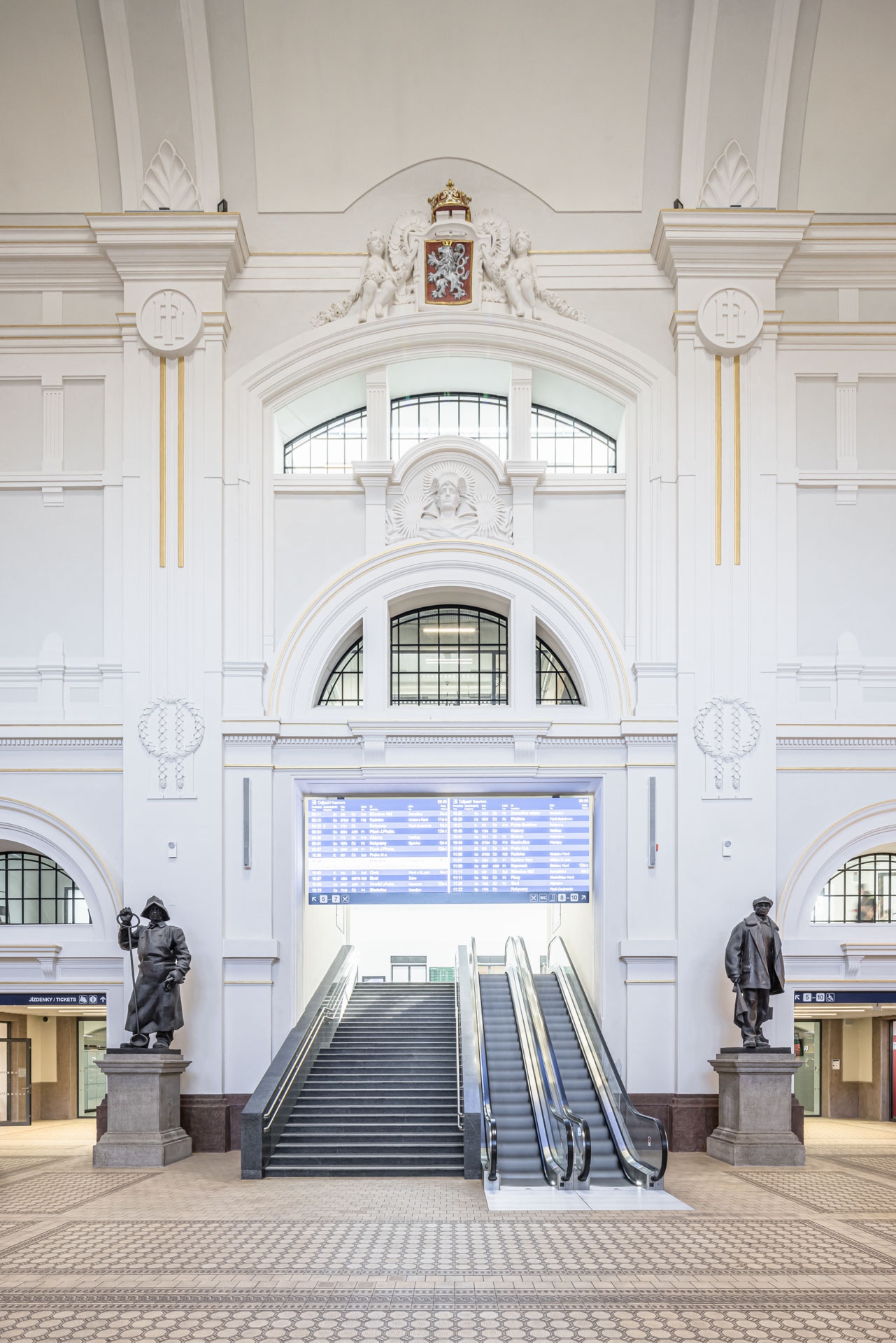
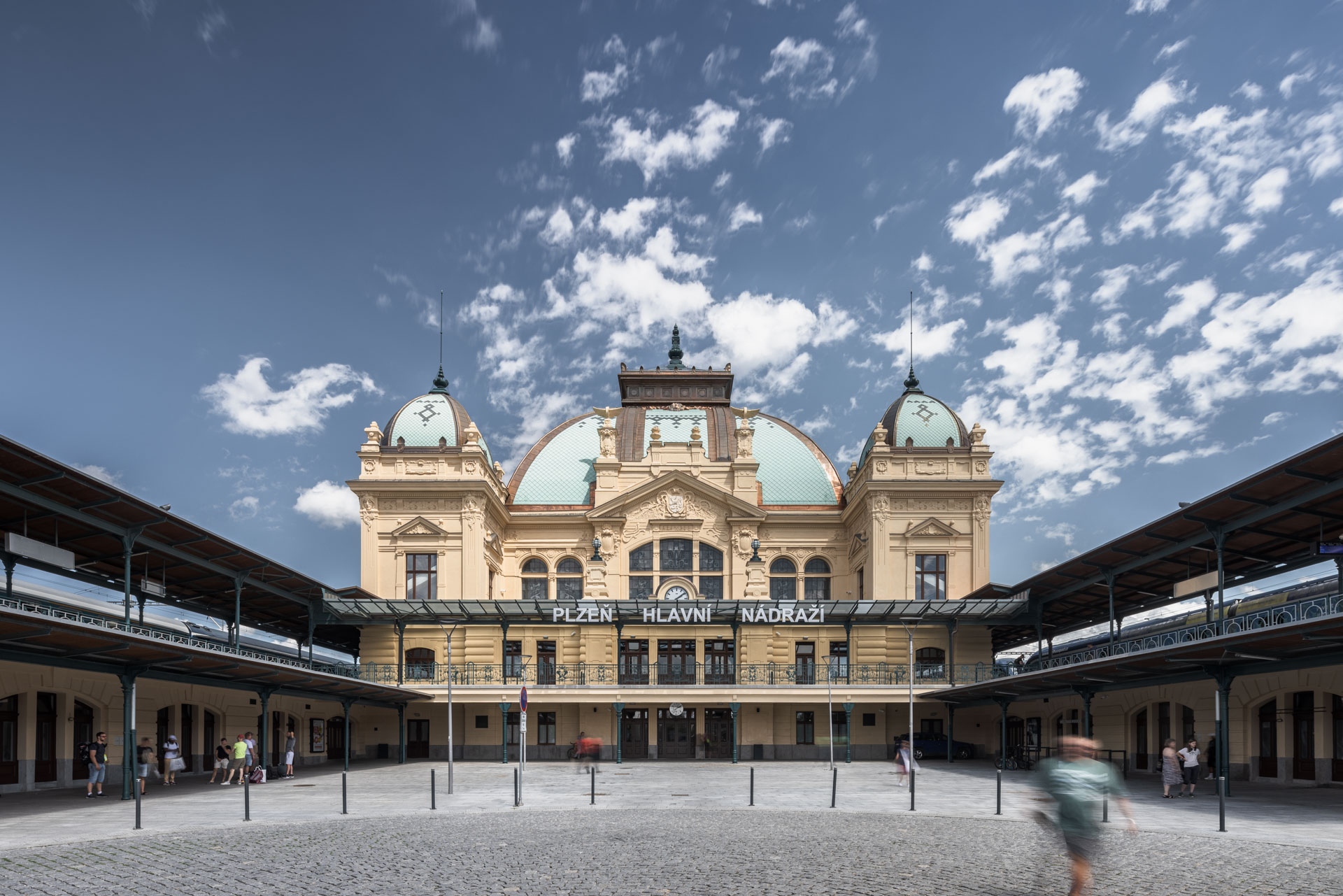
Pilsen's main railway station is one of the architectural landmarks in the center of the Czech metropolis. The imposing Art Nouveau building was constructed in 1907 and has been a listed building since 2000. A special feature is that, unlike many other railway station buildings in the Czech Republic, it stands in the middle of the tracks.
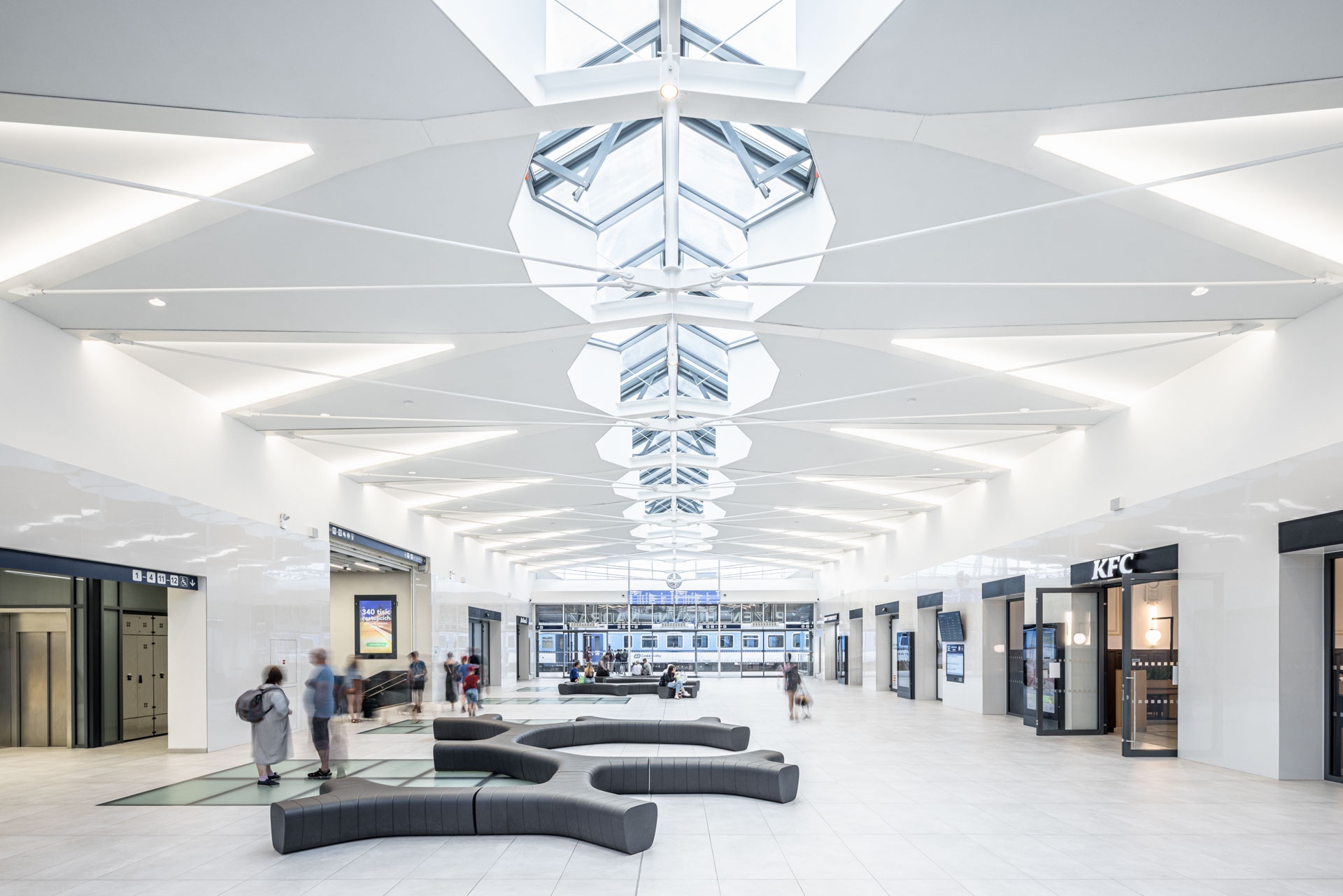
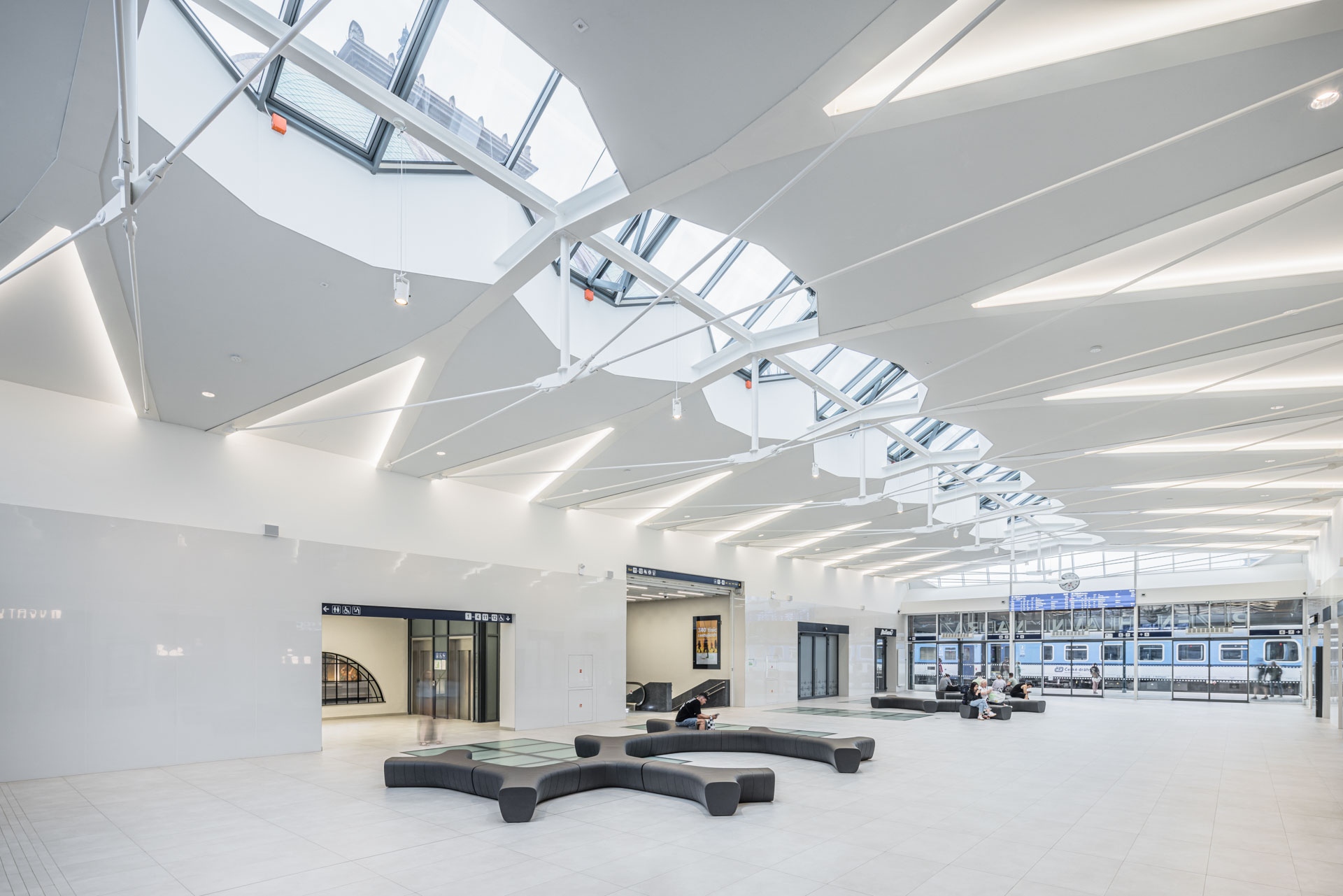
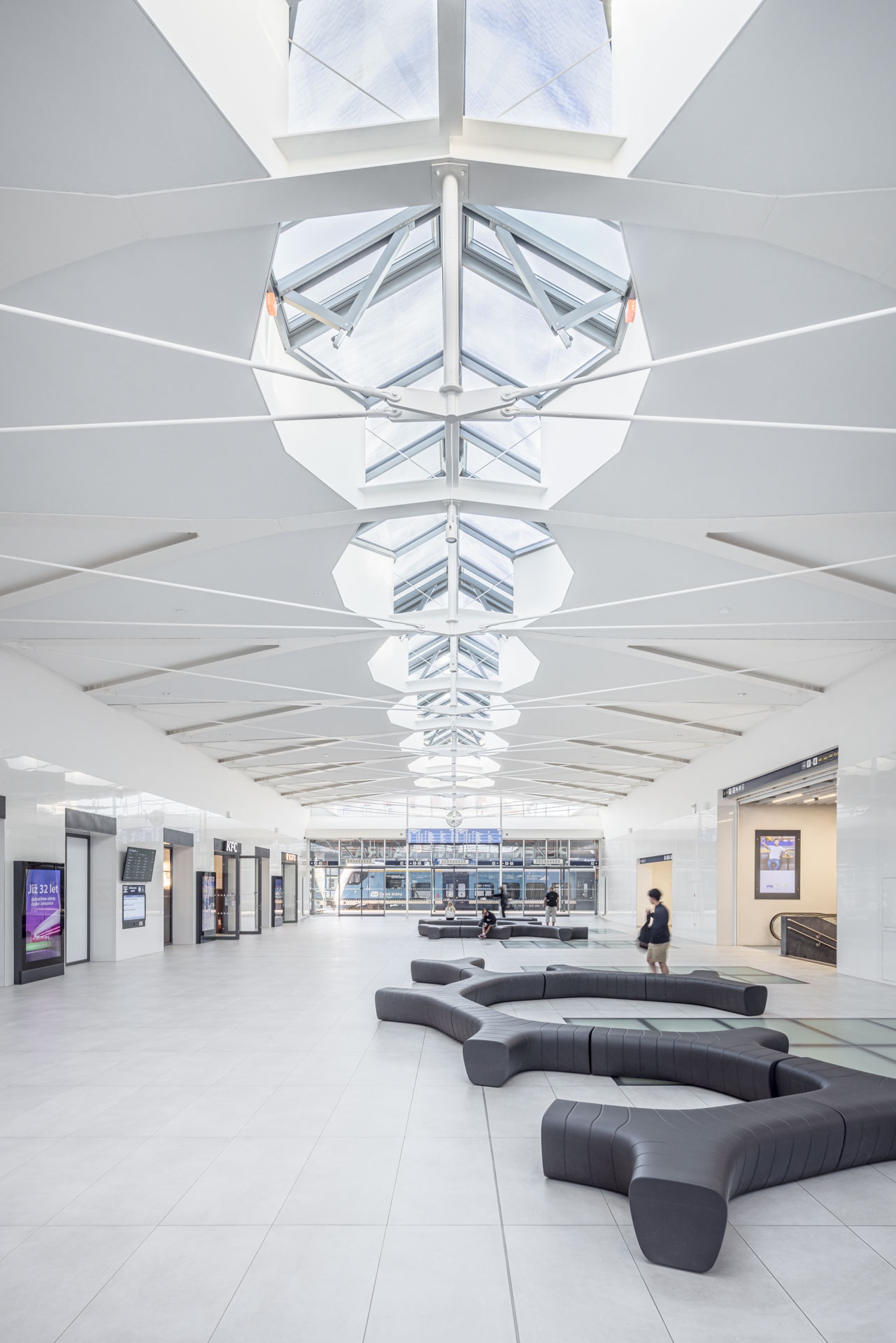
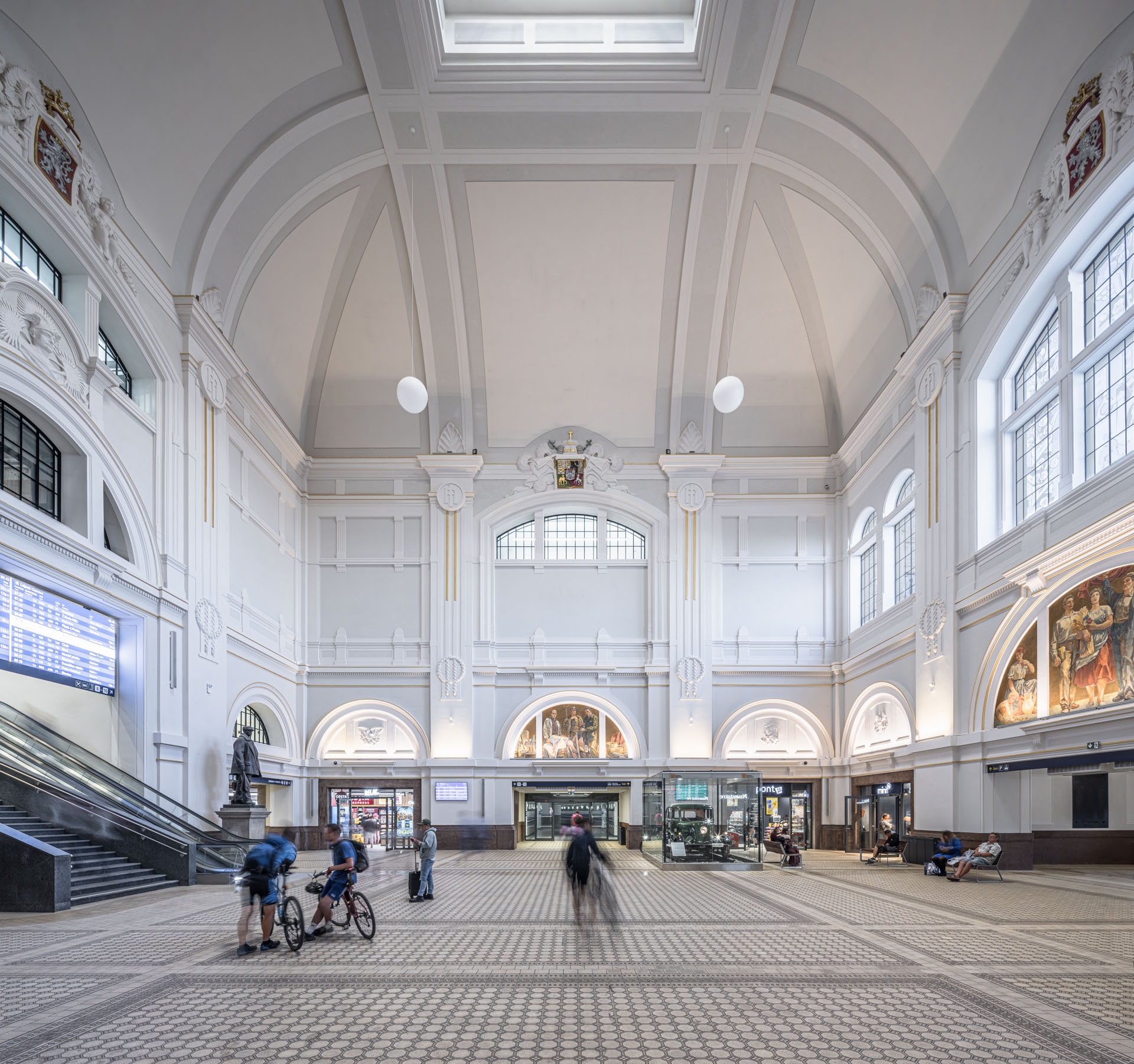
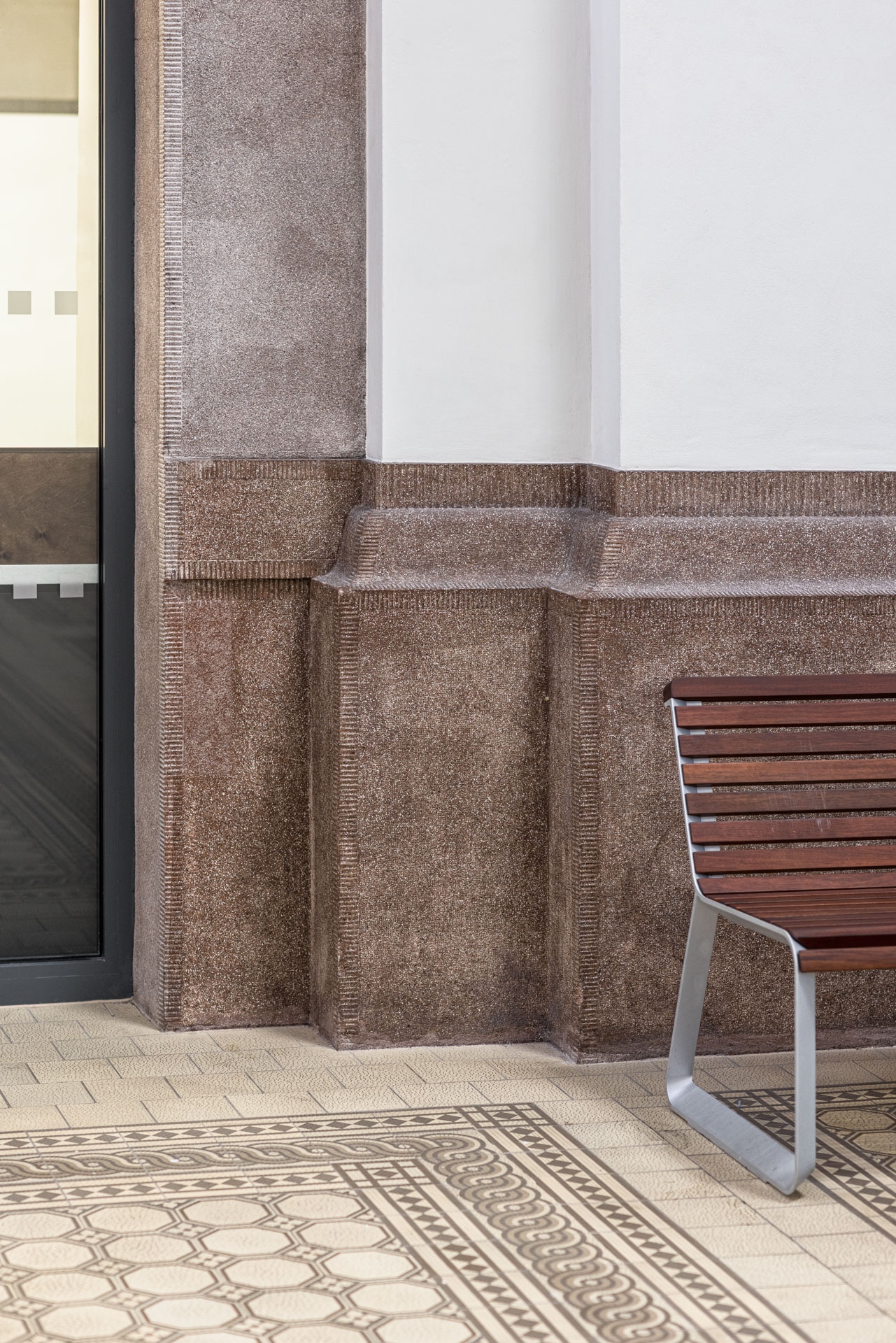
The listed building has recently undergone extensive renovation. The design was created by the Prague-based architectural firm A8000, and the construction work was carried out by the Czech infrastructure specialist SUDOP. During the renovation, the entire interior of the station was restored to its original architectural quality, and unused areas and rooms were brought back to life. The biggest change concerns the new route for passengers through the building: they can now use the central ticket office area, stroll through the expanded shopping mall, or have lunch in the restaurant on the platform before their train departs. The former heterogeneous, rather restless color scheme has given way to the original colors of the original design, cream and gray. The central main hall has been enhanced with a replica of the historic floor, and the floors at the ticket offices and in many other areas have been complemented with tiles from the current RAKO collection. They are just as durable today as they were over a hundred years ago, when RAKO was also commissioned to furnish the Pilsen railway station.
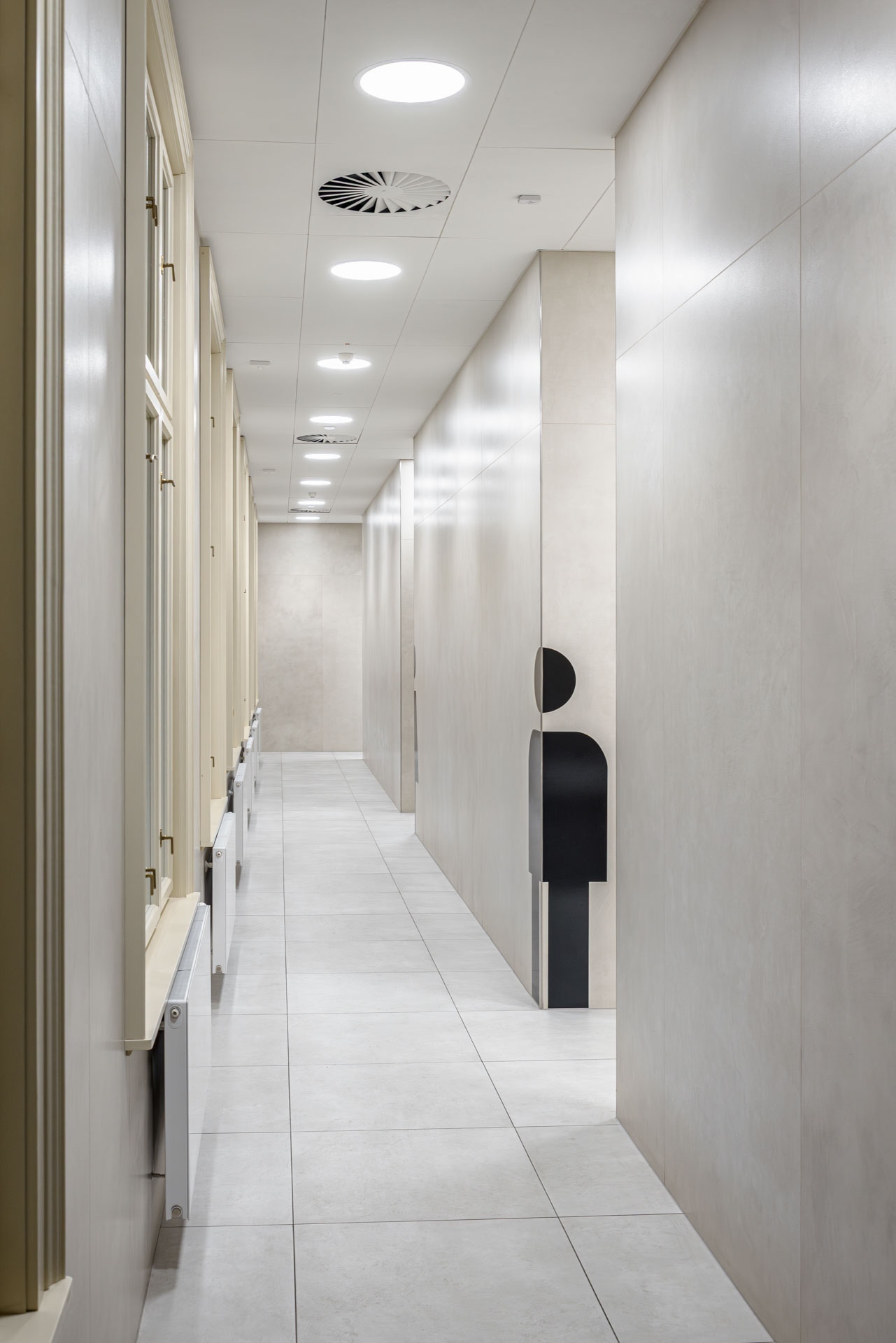
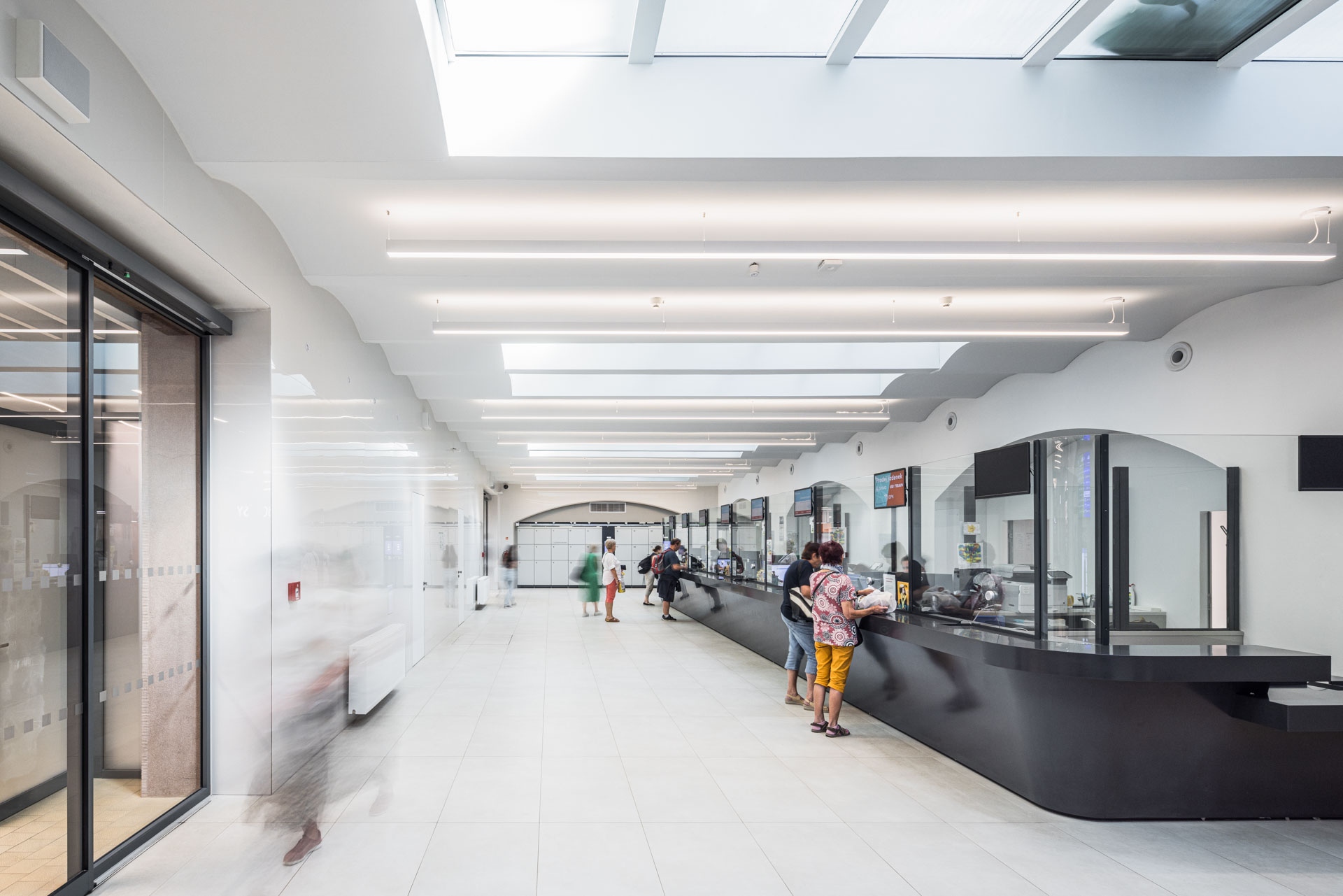
The entire building has been given a new roof and facade. The upper hall now has the character of an open and bright shopping arcade, the sales area has been enlarged by 150 m2, and the lighting has been redesigned and improved. Responding to current trends, the station is now a transport and shopping center where travelers feel comfortable while waiting for their trains. The central ticket office and information center have been completely redesigned: the various ticket counters are connected in a minimalist style by a black counter combined with light gray tiles from RAKO's Extra series. All toilets are barrier-free, and new orientation systems help visually and hearing impaired visitors. A central design approach is to strengthen the connection between the station and the city. A new restaurant with a beer garden overlooking the tracks and trains has been added to revitalize the previously unused area behind the station.
From the report by the designers A8000, translated into German and revised.
Growing rail traffic requires modern stations
In 2016, railway stations in the Czech Republic were transferred to the ownership of the railway administration, which was an important starting point for numerous conversions and renovations. In 2024 alone, 50 station renovations or investments in station buildings were completed, for example the stations in Beroun, Budweis, and Pilsen, which were either under construction or in the planning stage. Another 20 locations are to follow in 2025. However, the pride of the railway administration is the comprehensive renovation of Fanta's Café. The iconic building at Prague's main station is characterized by a high dome, whose walls are decorated with Art Nouveau motifs and sculptures.
The development of stations and their adaptation to contemporary requirements and uses is an important issue for railway administrations as passenger needs change. In addition to cafés and shops, services that were previously rather unusual, such as doctors' offices, veterinary clinics, and government offices, have therefore been added in recent years. The latest example of the efficient conversion of station space is the new police station at the station in Budweis. In the long term, it is also very important for the state to ensure accessibility in its stations, whether through structural modifications, lifting platforms, or assistance systems. This requirement is proving successful: according to the railway administration, more than 60% of platforms and 68% of all station buildings on the main lines are now accessible to wheelchair users.
Pilsen station: an opportunity for the whole city
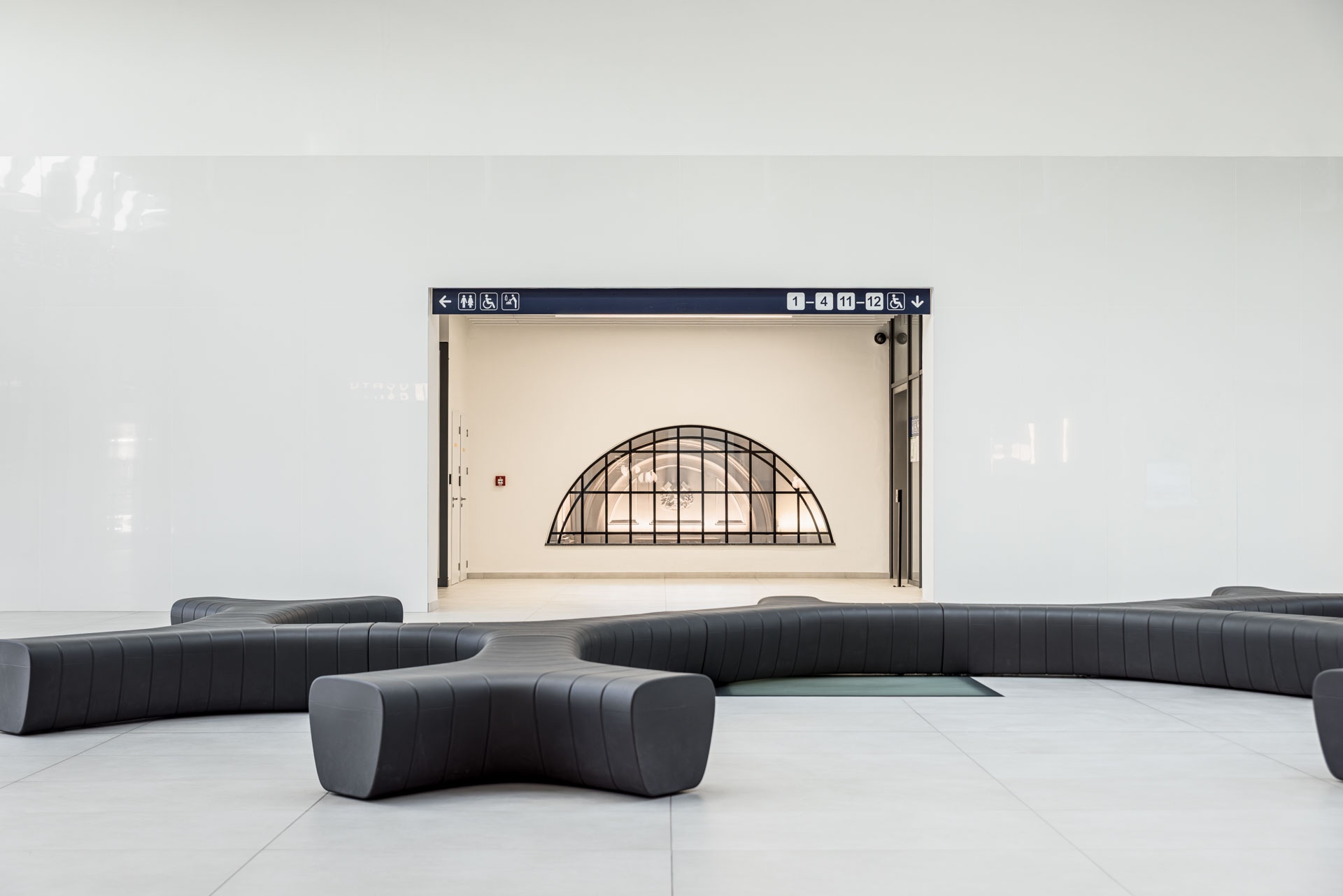
Architect Pavel Kvintus from the architectural firm A8000 explains: “The renovated station in Pilsen is a great opportunity for the development of the entire city. ” The architectural firm A8000, together with the construction company SUDOP, approached the redesign of the interior of the historic Pilsen station with caution and respect for the existing structure. In doing so, the architects and the construction company succeeded in rediscovering and highlighting the original, elegant character of the building. To this end, the color scheme was completely changed: as was the case fifty years ago, soft shades of gray, white, and cream now dominate the interior. Historical elements or replicas thereof are accentuated by new, modern interpretations. “We have renovated the historical parts of the station with respect and used modern materials for the fixtures and fittings, so that the new and old complement and blend harmoniously. This is an approach that is very important to us. However, our main focus is on simplifying the journey for passengers. The interior of the station needed to be clear and functional. The existing layout of the station building was confusing and the ticket offices were scattered in different places," explains Pavel Kvintus.
Safety and durability: the Extra series from RAKO
With a long tradition dating back over a century, RAKO ceramic tiles have become an integral part of many station buildings in the Czech Republic and Slovakia. In heavily frequented buildings, durability is essential, and this is something that RAKO has always offered – for example, in the main stations in Prague, Pilsen, Beroun, Rakovník, Budweis, and Ostrava. Architects and planners therefore continue to use RAKO ceramic tiles in renovations because of their unique properties and to preserve the historical and aesthetic value of the stations. Thanks to their resistance to mechanical damage, moisture, chemicals, and fire, ceramic tiles ensure that surfaces remain clean and safe for thousands of passengers every day. RAKO tiles meet the highest quality and design standards. Combined with their long service life and low maintenance costs, they are an economical and popular choice for railway stations, other public areas, and public sanitary facilities.
This also applies to the modern tiles from the Extra series in 60 x 120 cm format in Pilsen's main station, which, with their simple design and color scheme, emphasize the replicas of the old historic tiles in the building, also from RAKO. Ondřej Bomberovič from the RAKO project team comments: “It's great when new materials fit well with the old tiles. Cooperation between the project team, suppliers, and architects is crucial to the successful completion of any project. Our team responds to the needs and visions of the architects and ensures that their designs are not only feasible but also meet aesthetic and functional requirements. By providing technical support and proposing innovative solutions, we help to effectively bridge the gap between design and implementation."
Conclusion
It is impressive what careful renovation can do to historic railway station buildings: travelers can relive the heyday of rail travel, the years when traveling by train was an experience and a privilege. Historic, sometimes nostalgic features of restored Art Nouveau buildings are blended with contemporary, mostly minimalist elements. The result is safe, functional, and clear spaces where passengers perceive the station as a pleasant environment where they can meet their needs and feel comfortable.
Project overview Renovation of Pilsen Station
-
Location: Železniční Street, Pilsen
-
Design, building permit and implementation planning, and implementation: ARGE A8000 s. r. o. with SUDOP PRAHA a. s.
-
Interior design: A8000 / Martin Krupauer, Pavel Kvintus, Martin Sedmák, Daniel Jeništa (project management architecture), Zdeněk Fux (lead engineer SUDOP PRAHA), Veronika Dolejšová
-
Client: Railway Administration Správa železnic (railway infrastructure operator)
-
Total cost of the station renovation: CZK 1.03 billion / EUR 41.3 million
-
Built-up area of the station building (land area): 4,990 m2
-
Converted space: 66,860 m3
-
Total floor area of the building: 7,940 m2
-
Interior design: 2022–2023
-
Execution period: 2021–2024
-
RAKO tiles used: Extra, Color One, and Color Two series
La reconstruction de la gare principale de Plzeň constitue un exemple réussi de rénovation d’un bâtiment de transport historique, combinant avec sensibilité le patrimoine culturel aux exigences du voyage moderne. Le projet, dirigé par le cabinet d’architecture A8000 en collaboration avec l’entreprise SUDOP PRAHA, a apporté en 2024 non seulement une revitalisation architecturale du bâtiment datant de 1907, mais aussi une extension fonctionnelle importante et une valorisation de l’espace public. L’accent a été mis sur la qualité de l’exécution, la clarté et le confort des voyageurs. Une idée clé du projet était également de reconnecter la gare à la ville. Une nouveauté est le restaurant avec terrasse offrant une vue sur les trains, qui animera un espace jusqu’alors inutilisé derrière la gare. Les carreaux en céramique de la marque RAKO, devenus une composante incontournable de nombreuses gares en République tchèque et en Slovaquie, ont joué un rôle essentiel dans cette rénovation.
Gallerie de photos