Szkoła Podstawowa Šeberov, Praga
8 wrz 2025 | The modern school – a focal point in life
The modern school – a focal point in life
The authors of the project, representatives of the school, and the Prague municipal district demonstrated what a traditional institution should look like and how it should function today. The result of this exemplary approach is a modern, spacious school where everyone is given the opportunity to develop. The architects built on the tradition of Czech modernism, used high-quality domestic brands and showed that sustainability is far from just being a buzzword. One such material, proven for its quality, is RAKO ceramic tiles, of which almost 5,000 m2 were used throughout the school premises.
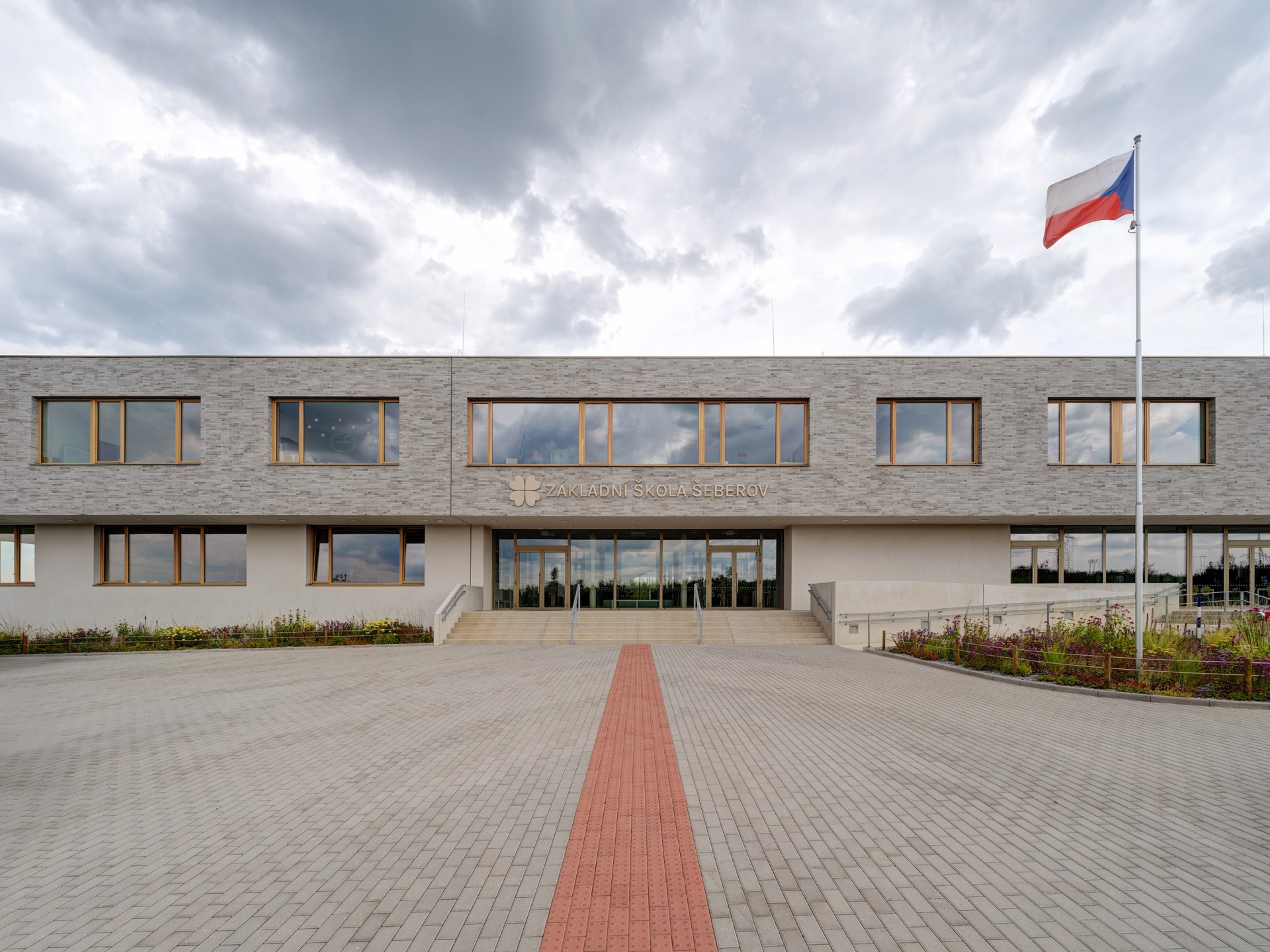
The new school was opened in the Prague district of Šeberov in mid-2024. The pupils and the community were afforded a space for building good relationships, modern learning, sports and community life. “It is a place that brings out the best in all of us. The amiable environment contributes to positive feedback from parents, teachers and the public. It shows that Czech schools can live up to the standards of the best European schools if the necessary investment is undertaken and if the schools are guided by modern philosophy. That is why we strive to be a school that facilitates the success of every pupil,” says school principal Jiří Luka in his introduction. The story behind the school’s inception is a long one. Back in 2010, the management held an architectural competition for the urban design of the area with the prestigious architectural studio ADR emerging victorious. “The construction was finished in less than two years, but the overall preparation took a total of fifteen years, so the actual construction only amounted to the closing stages of the project for us,” says architect Aleš Lapka.
Modern, to the letter
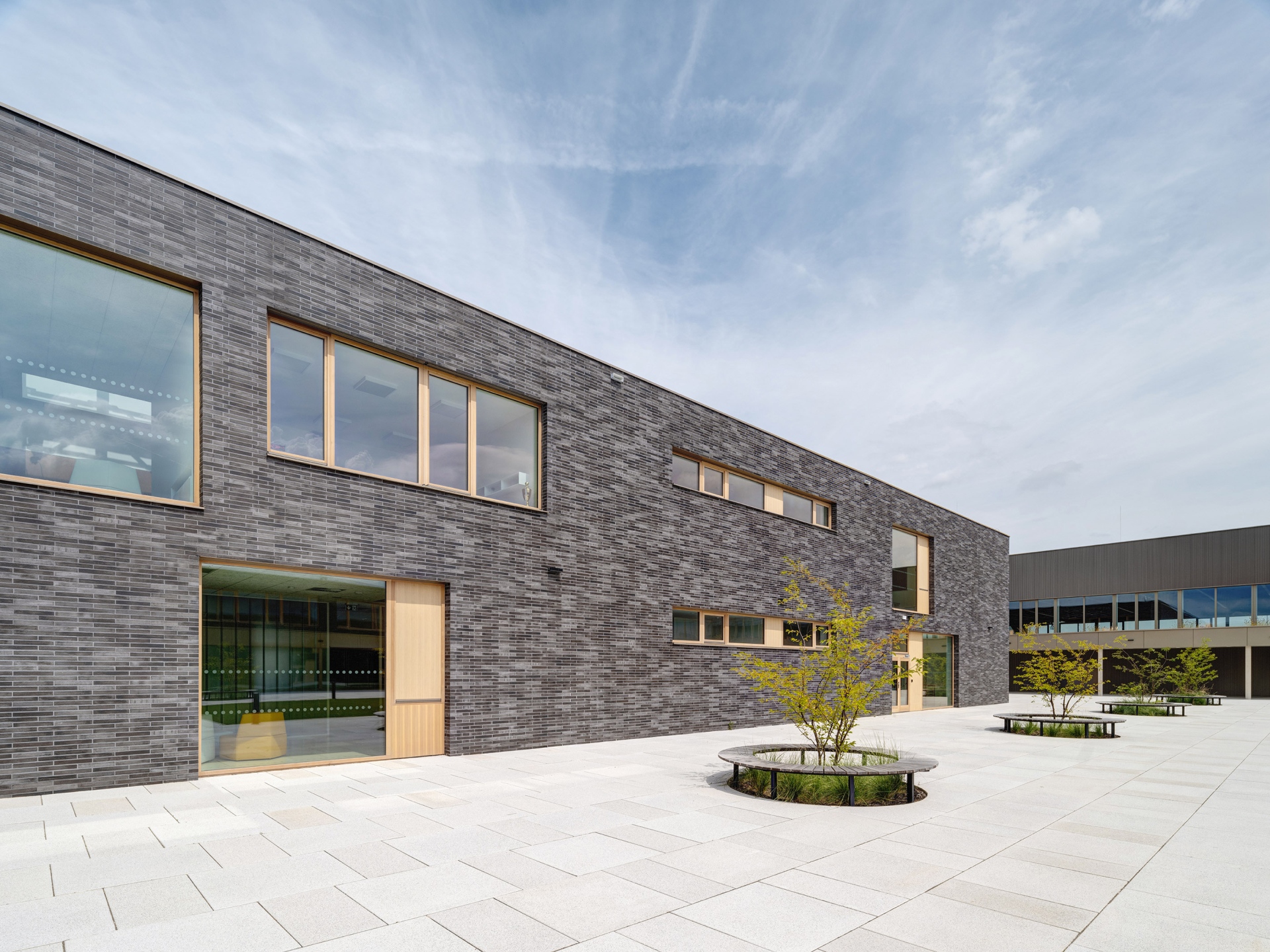
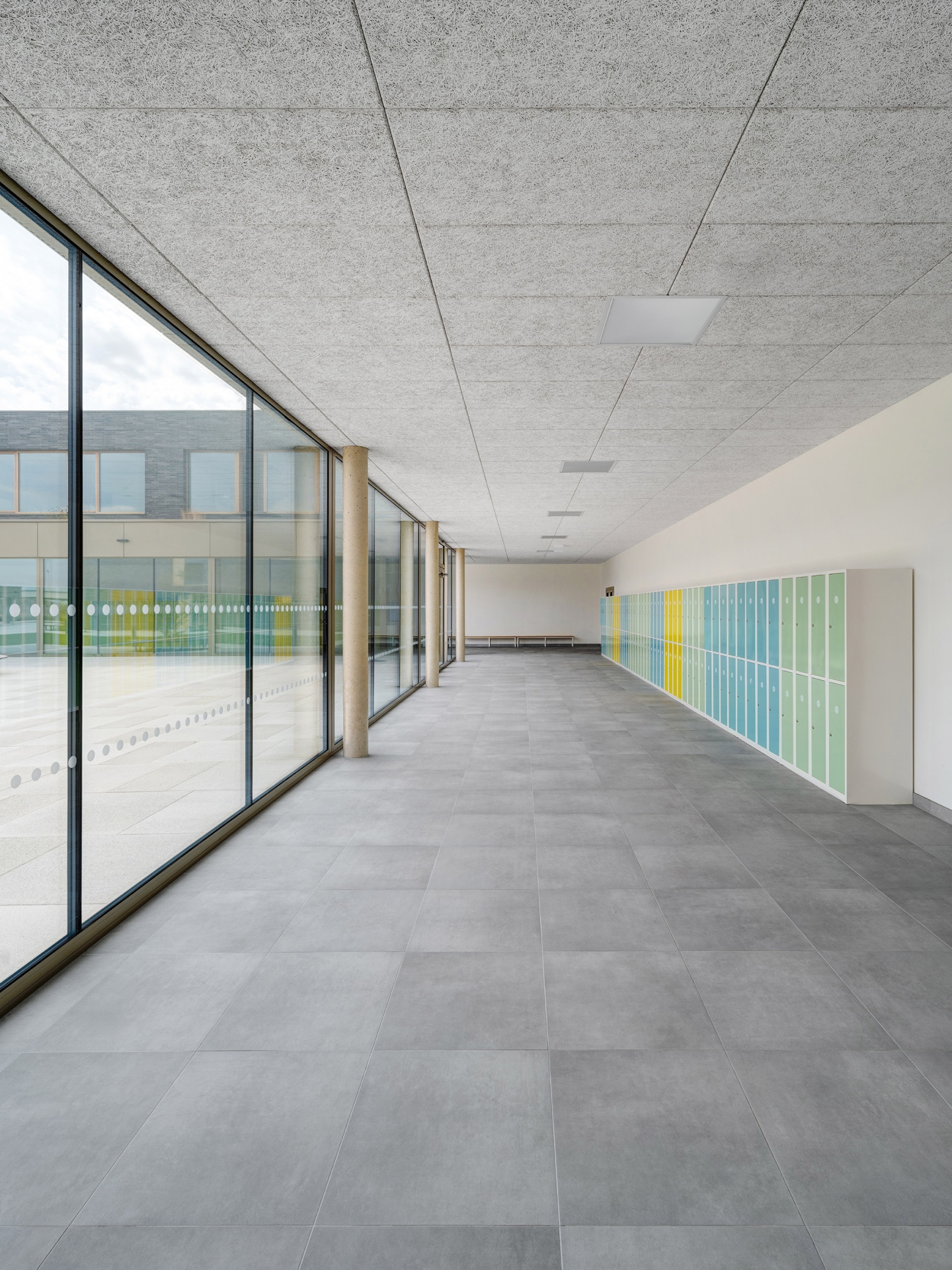
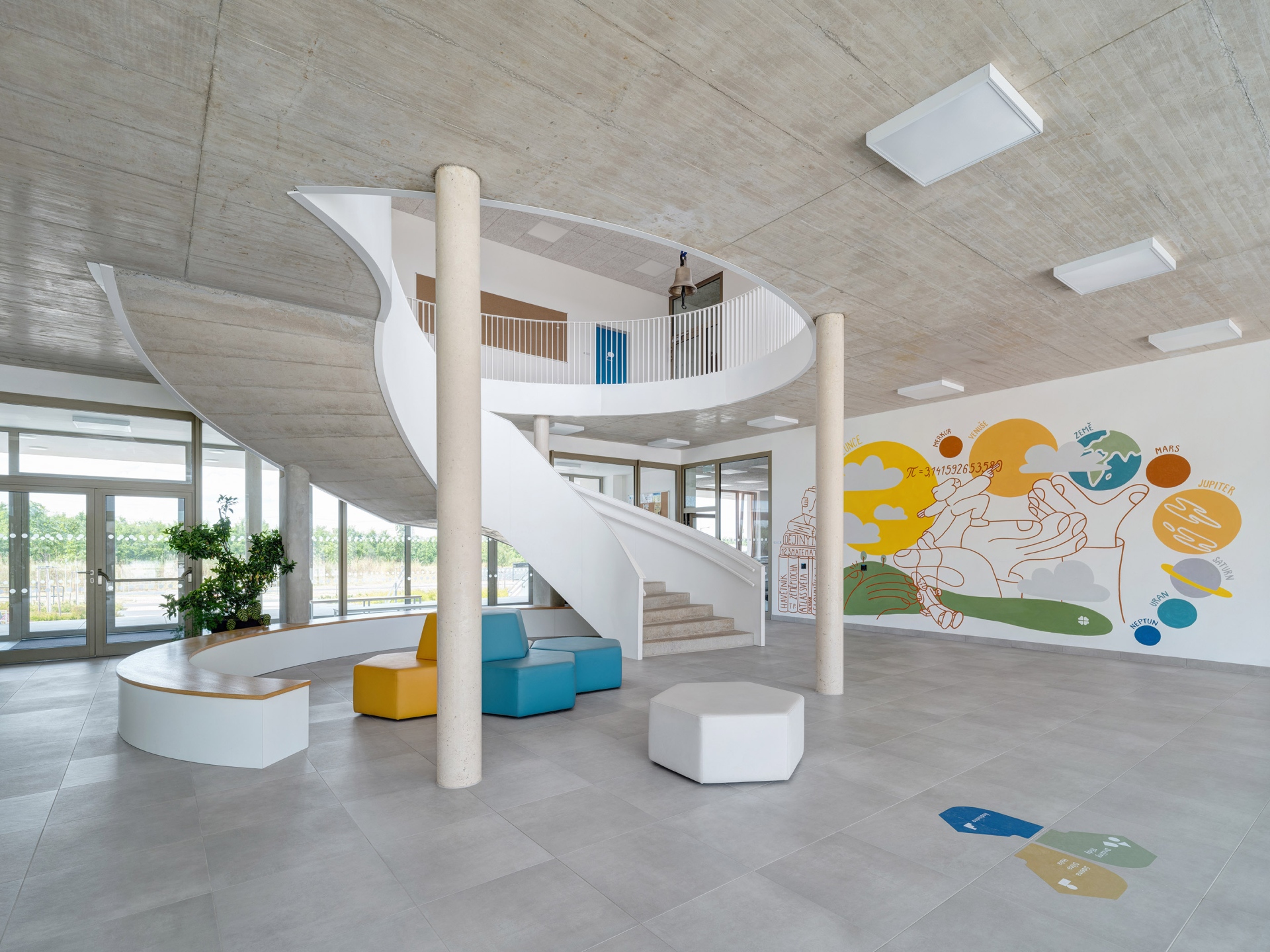
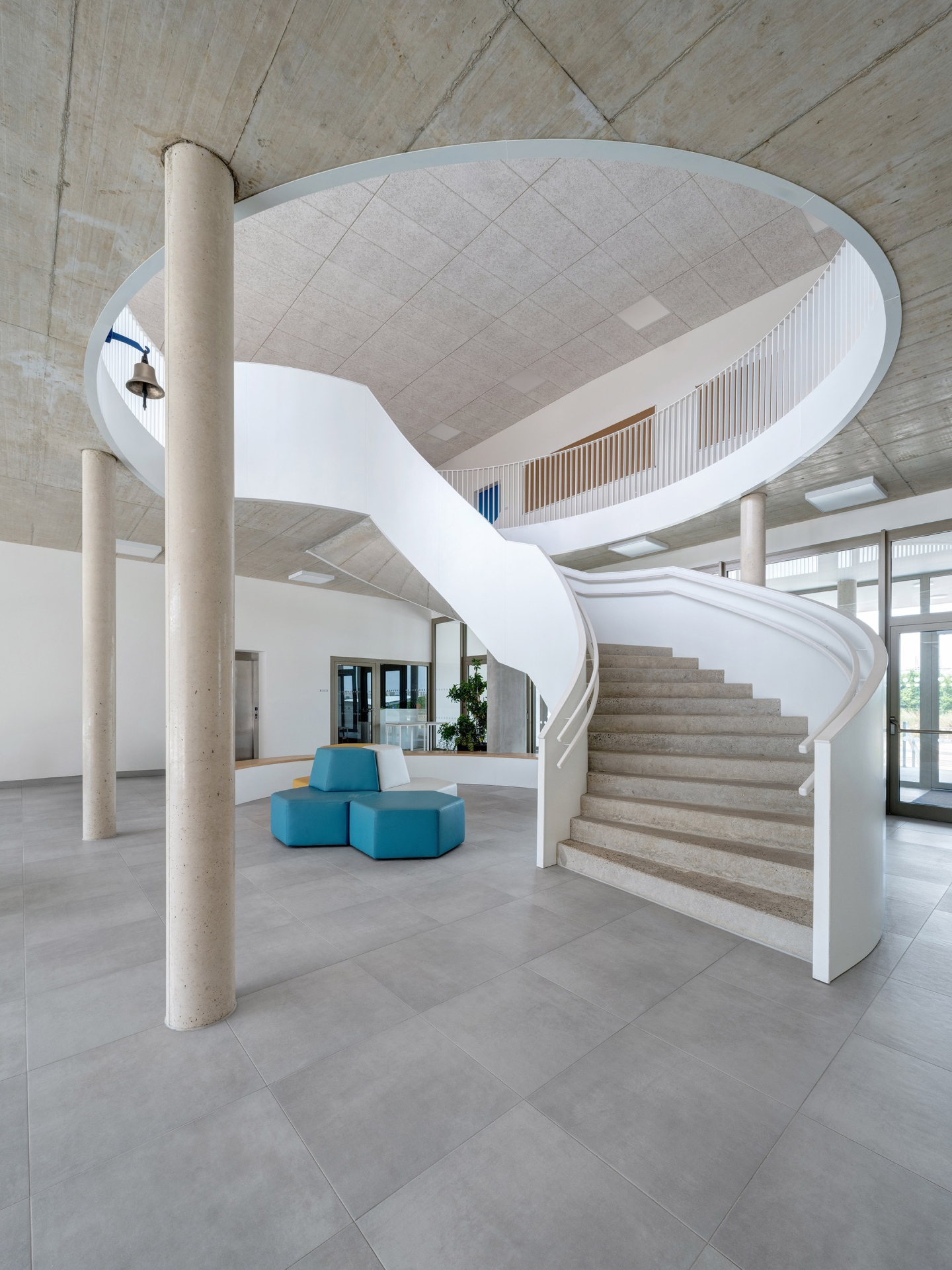
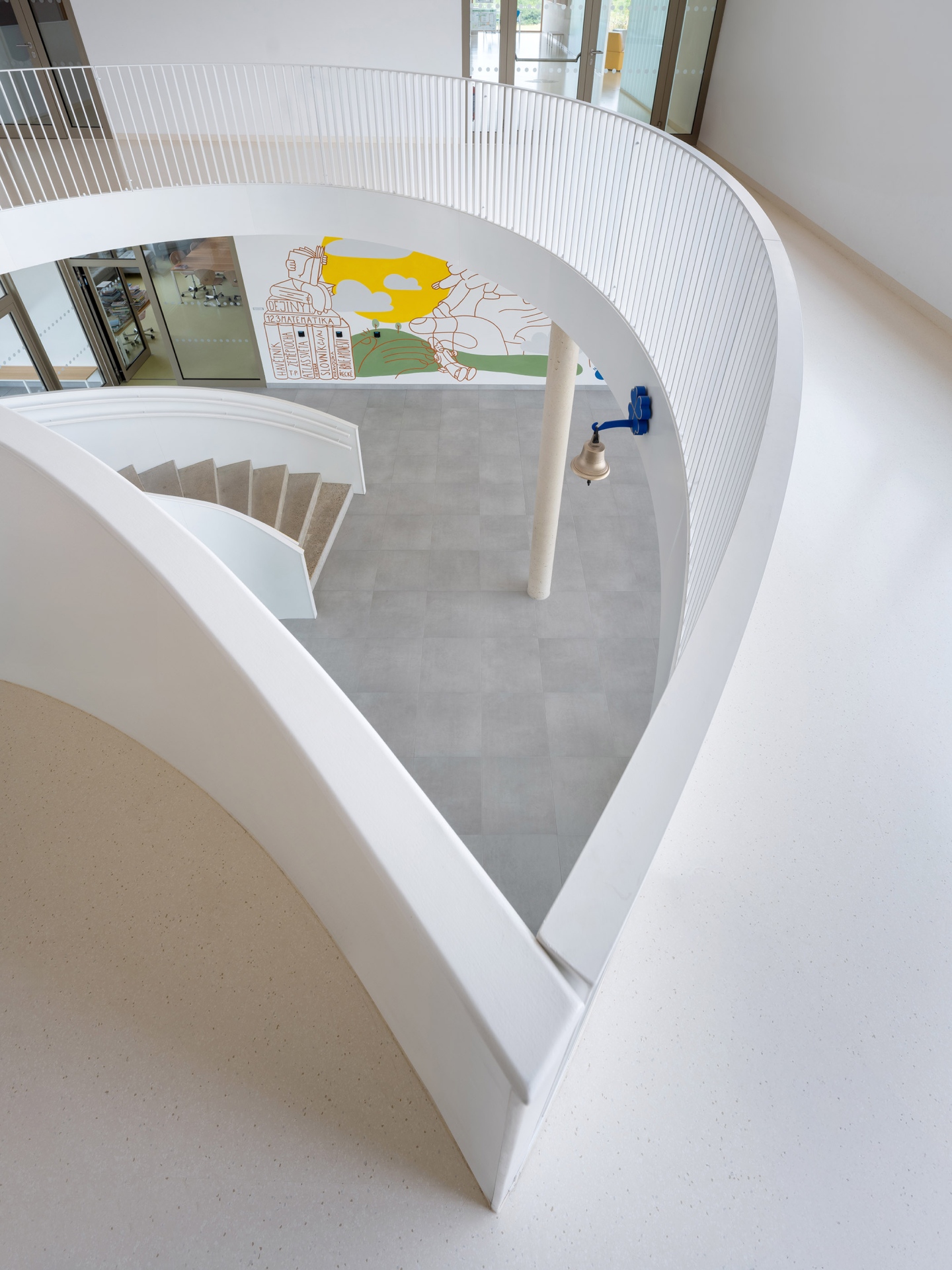
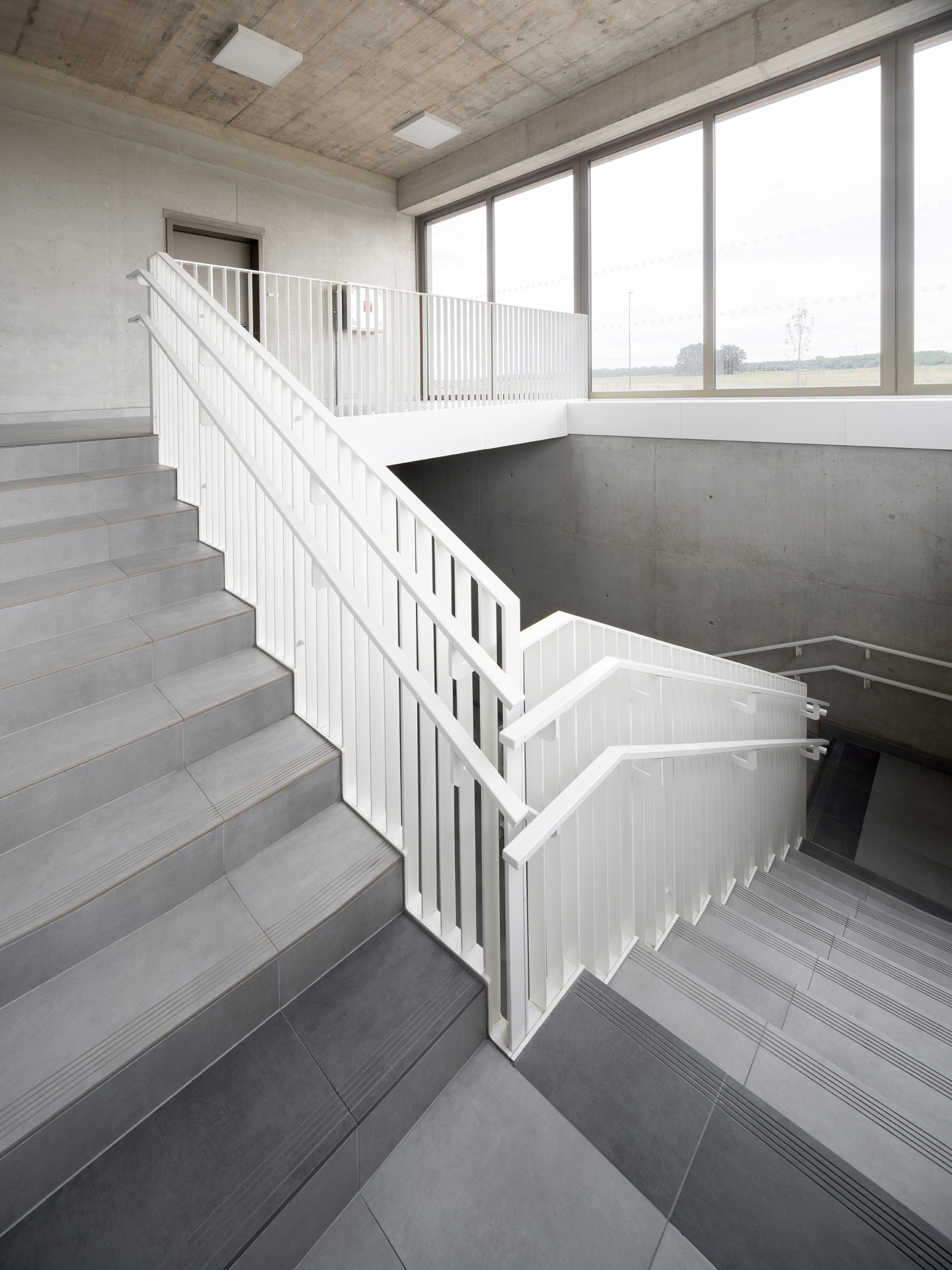
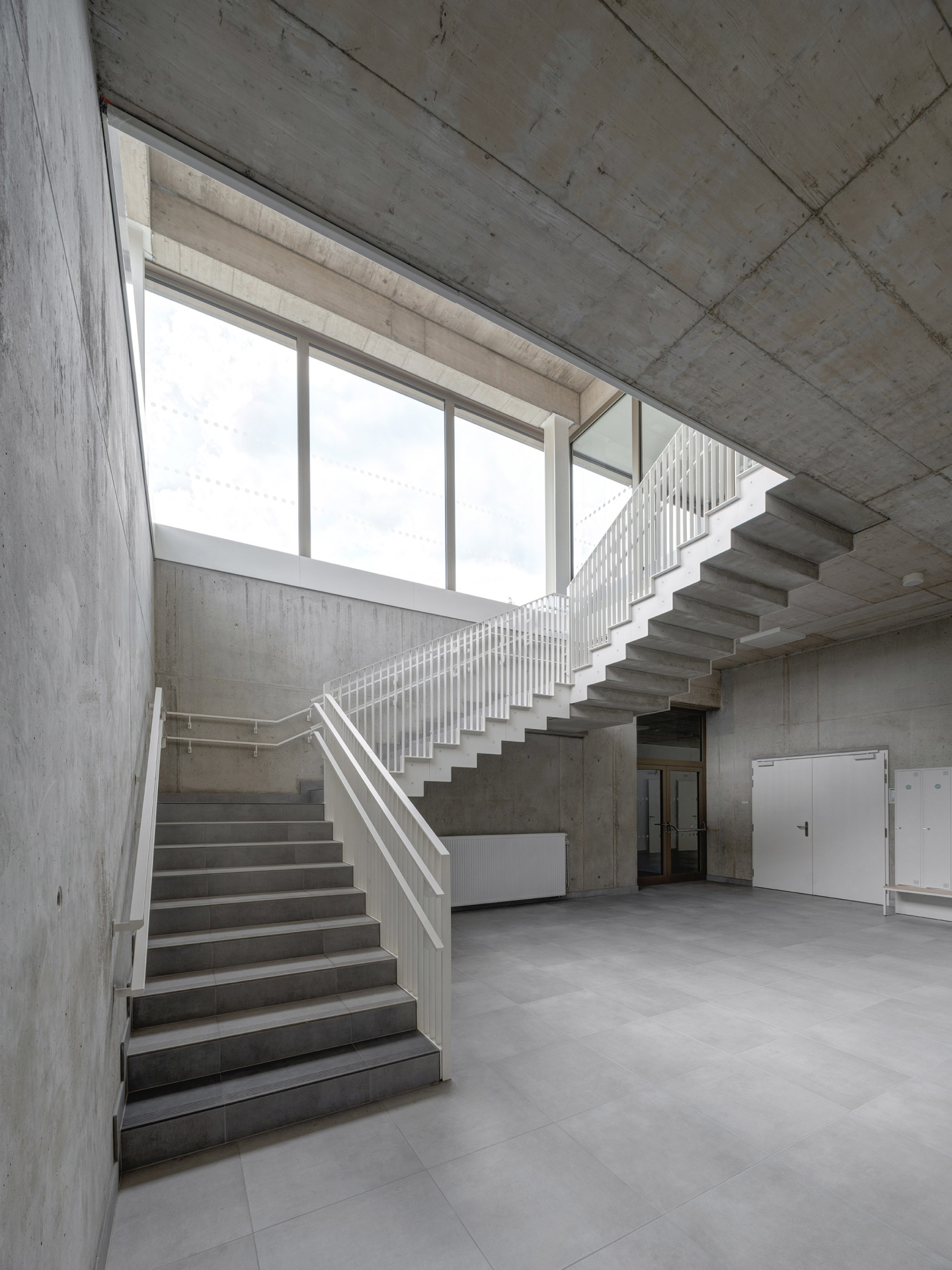
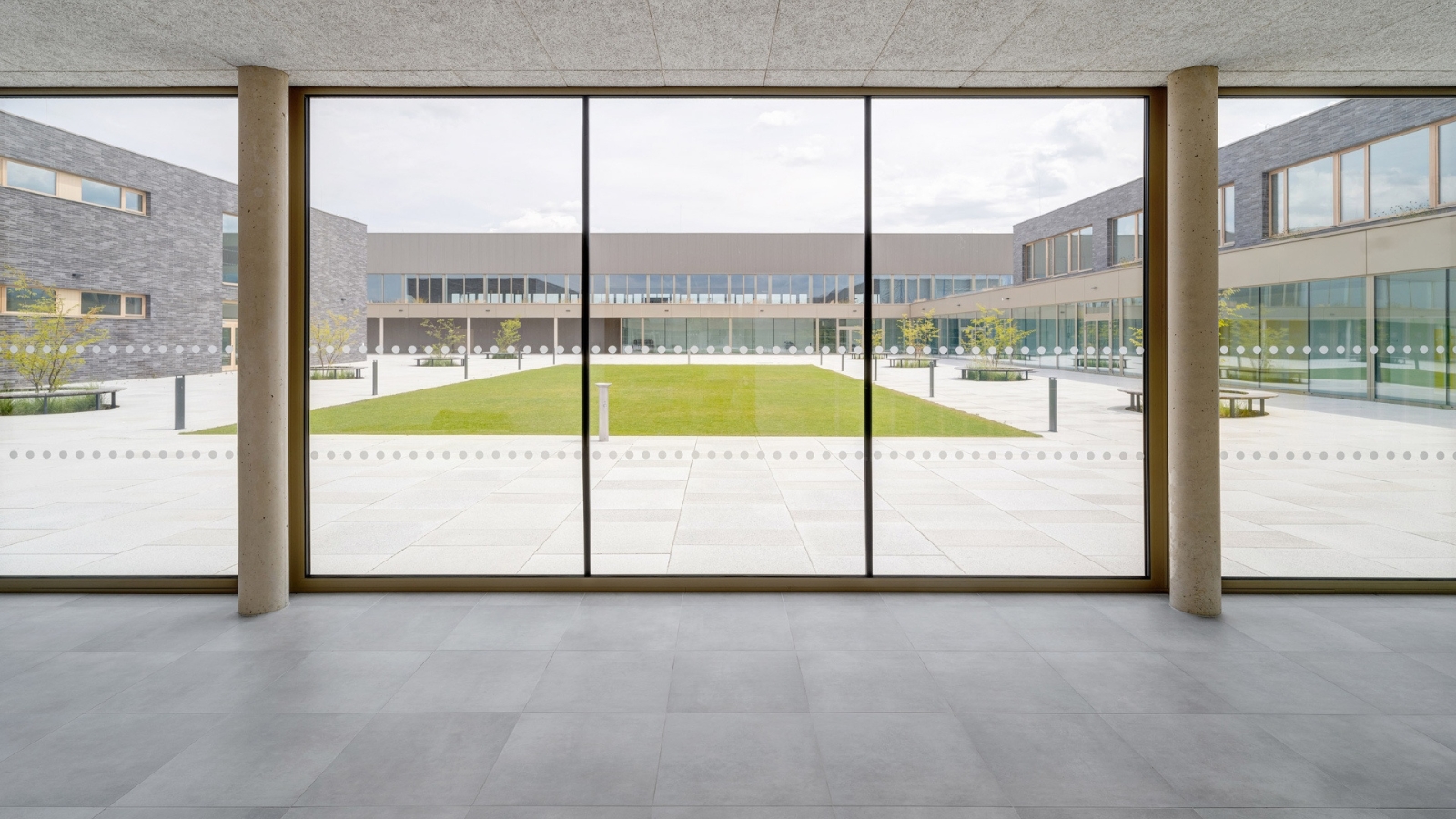
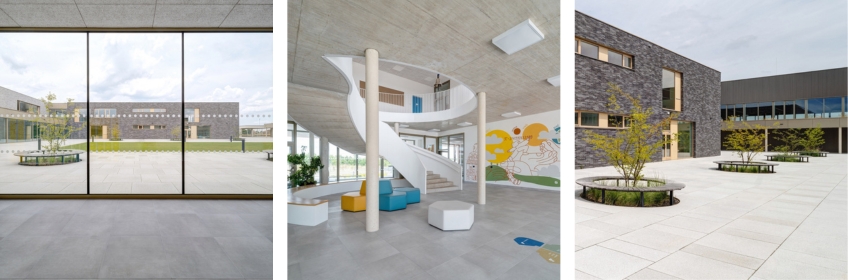
The first- and second-grade primary school has been generously designed to facilitate modern teaching, sports and leisure activities, and includes a well-equipped catering facility, dining hall, library, after-school club and other facilities. The complex consists of three two-storey wings arranged in a U-shaped formation. The main building provides a link between the two parallel pavilions (which mainly contain classrooms). The architects designed the central staircase as a dominant feature made of monolithic concrete. The large school yard is bordered by a building with two gyms. Adjacent to them is a shelter with a sports field and an auditorium. The brick façade of most buildings underscores the sense of dignity and representativeness of the educational facility. For better orientation, the architects distinguished the shade of the main building’s façade from that of the adjacent buildings. The gym is deliberately visually contrasted thanks to a glass frame façade and cladding made of profiled sheets.
When architecture helps
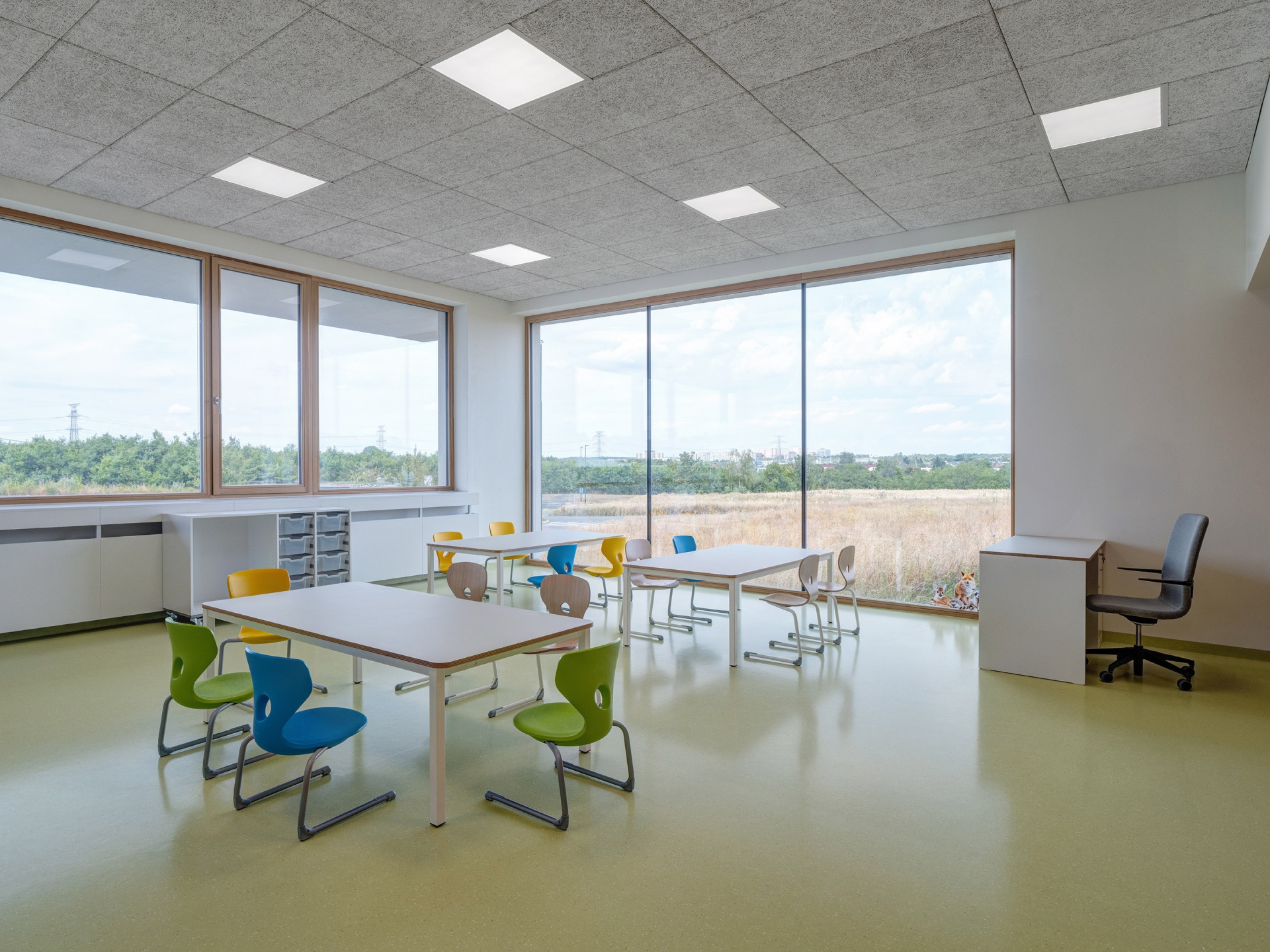
The new school’s principal is convinced that a well-designed building becomes the foundation for something much deeper – a space where people meet, create and share unforgettable experiences. In his words, the term ‘modern school’ is not just about the latest technologies and design. It is about relationships, trust, cooperation and the development of literacy and skills that children need in life. The need for greater individualisation must build on the strengths of pupils and teach things in context, in real situations, and the teachers should not be afraid to take the classes outside. “This is the direction our school has taken and the new building helps us greatly in this – it offers shared spaces, open classrooms, a library, a modern cafeteria and sports facilities. These are all places where what the word ‘school’ represents for me is born and materialises.“ He then added: “The environment in which we live and work influences our mood and results. Clean, functional and pleasant spaces, both indoors and outdoors, motivate us to perform better and build better relationships. School should be a safe and inspiring place – whether it’s a classroom, library, corridor or cafeteria. A modern school also includes sports halls and outdoor playgrounds, which are key to children’s health and well-being."
A living organism has rules
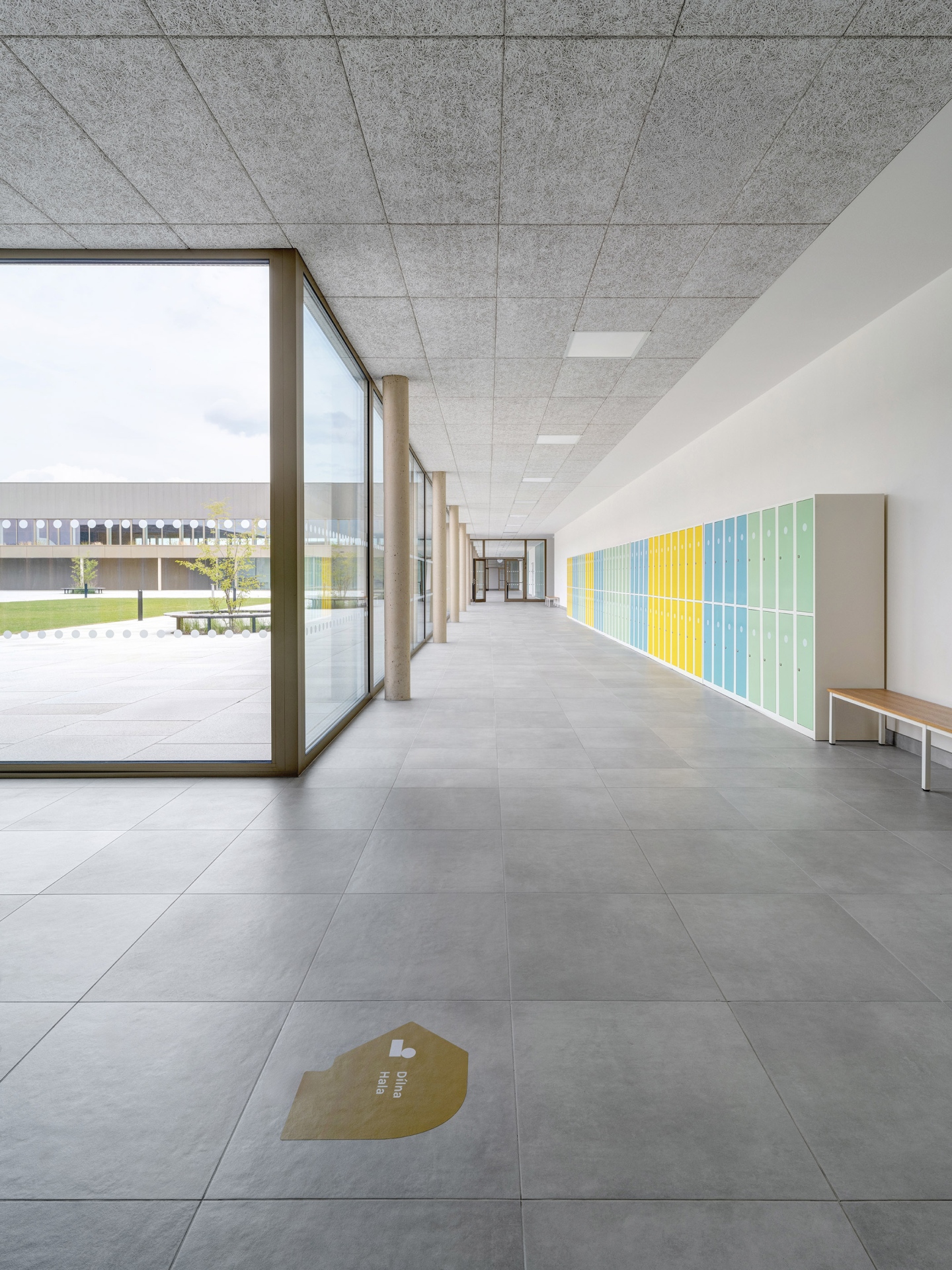
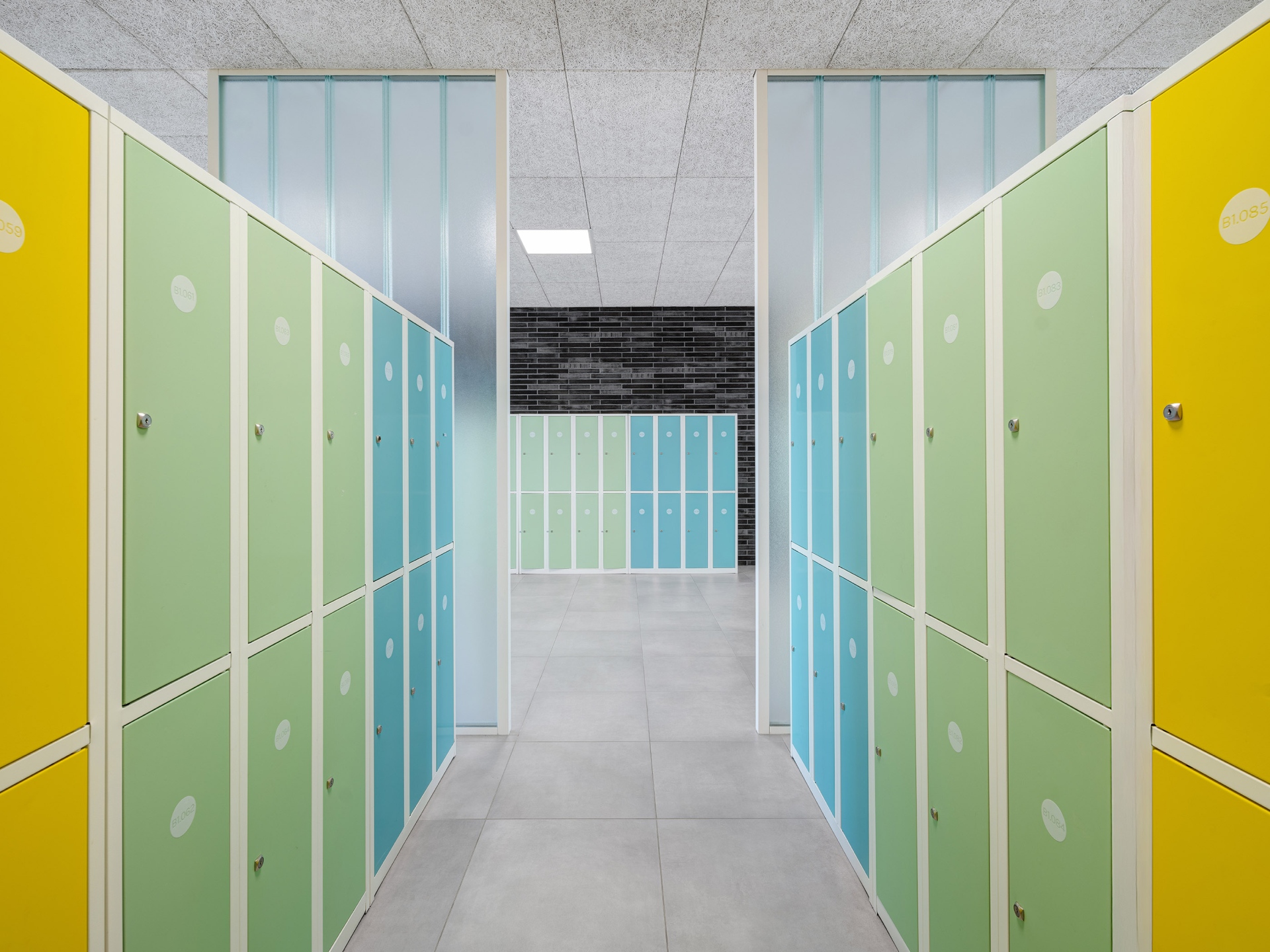
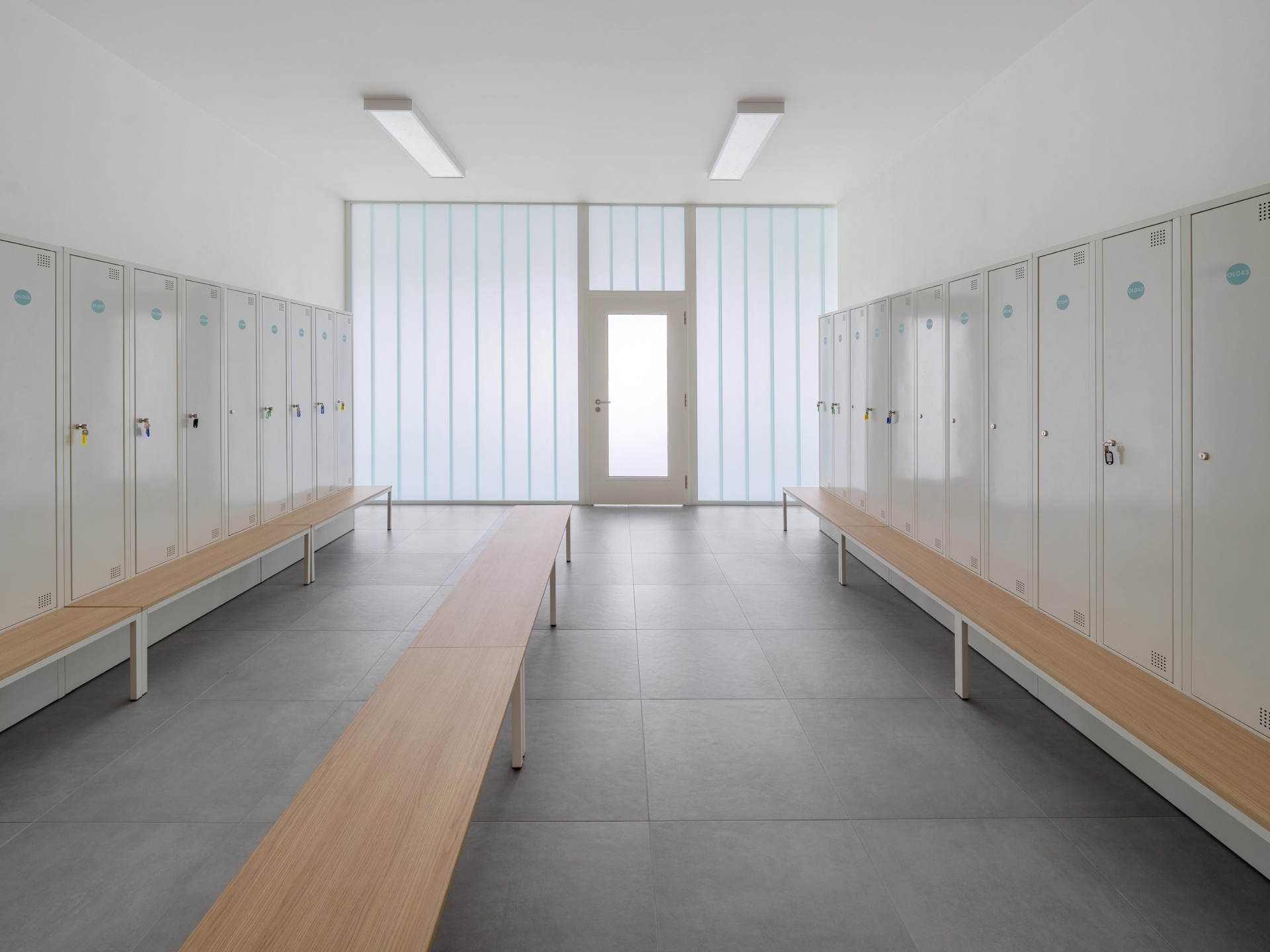
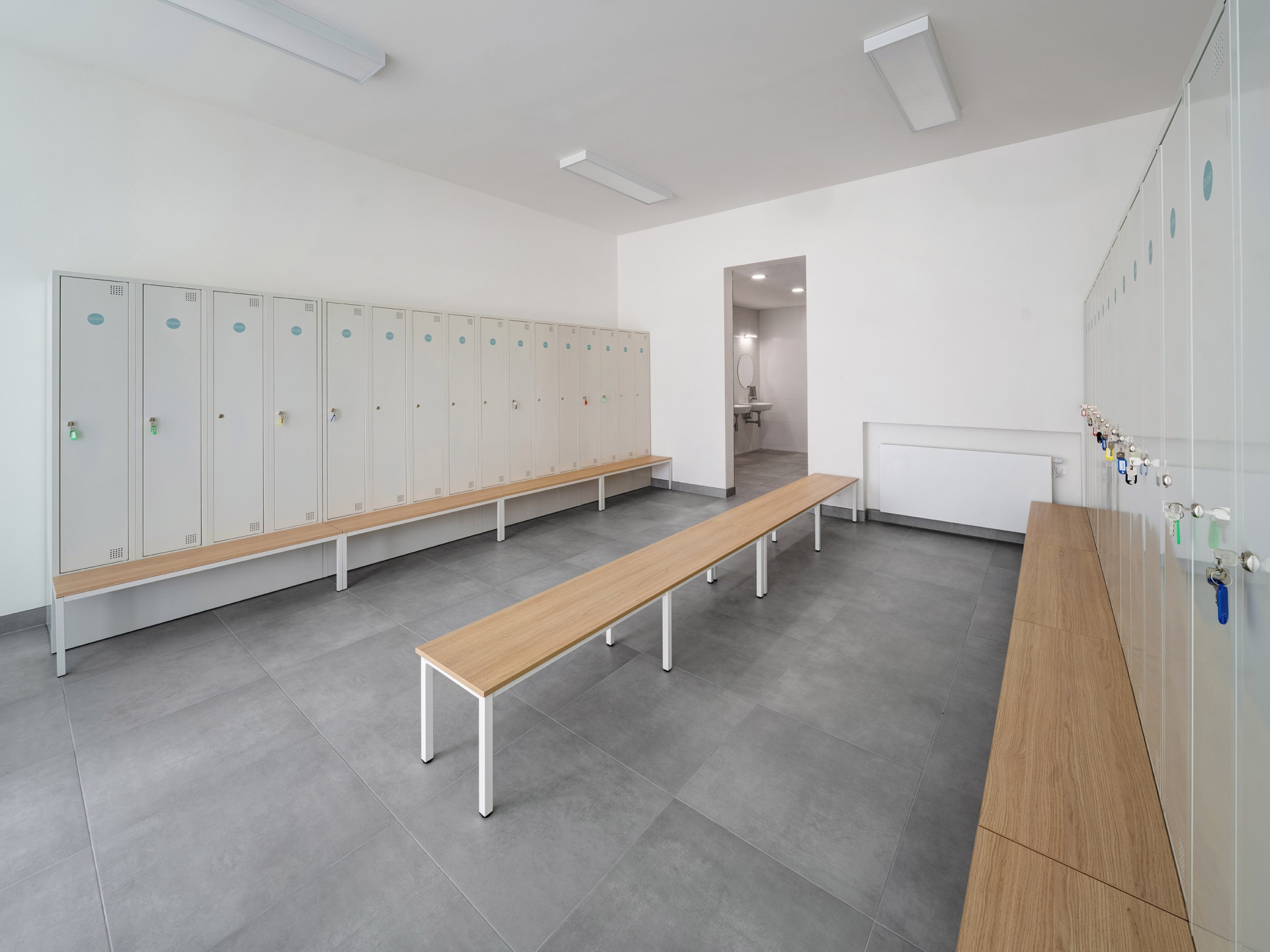
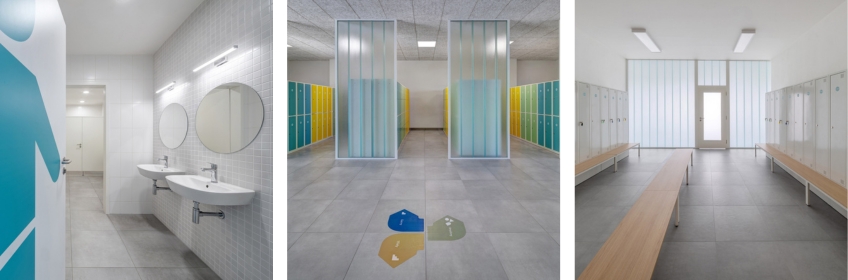
The school is currently frequented by 350 pupils, and the plan is to increase the capacity to 450 children. The corridors are no longer empty and are now bustling with activity. With this in mind, the architects worked from the outset when selecting high-quality floor coverings. Primary school is a public space and the parameters of the materials used must comply with the relevant laws and standards. Some parameters are defined by hygiene standards, such as the slip resistance of floors in sanitary facilities. ADR studio’s architect Aleš Lapka adds that hygiene and fire safety requirements are more strictly monitored today compared to the past. Aesthetic considerations are also important. Floors in schools are subject to similar requirements as in other public buildings, with a focus on slip resistance, durability, hygiene, fire resistance, easy maintenance and surface longevity. Ceramic tiles are the clear choice to achieve those properties. For the future success of the project, it was essential that those who use it – in this case teachers, cooks, janitors and, last but not least, pupils – were also involved. The school management therefore communicated openly with the architects in advance to ensure that the final solution met the required specifications as closely as possible.
Memories of the future
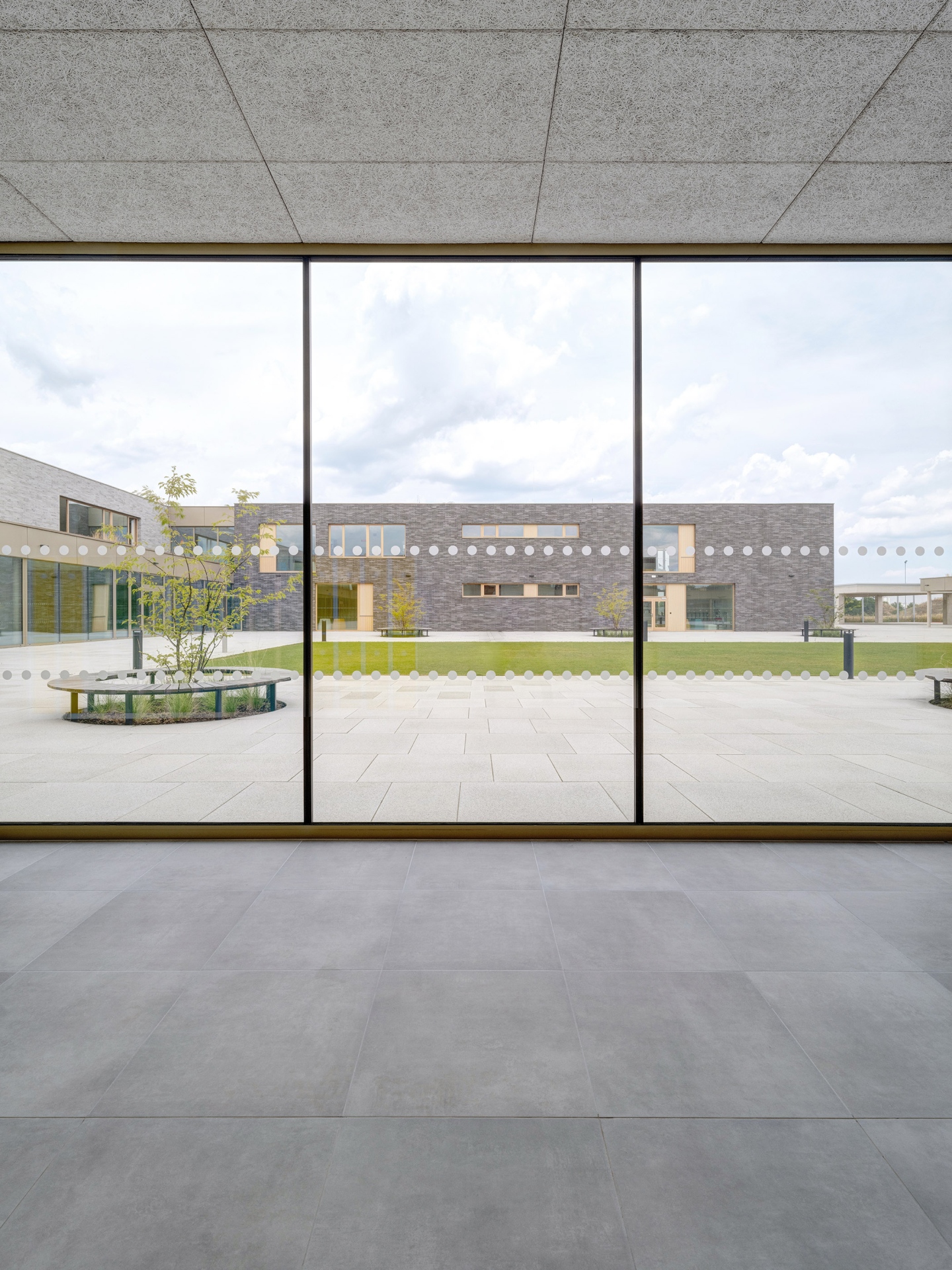
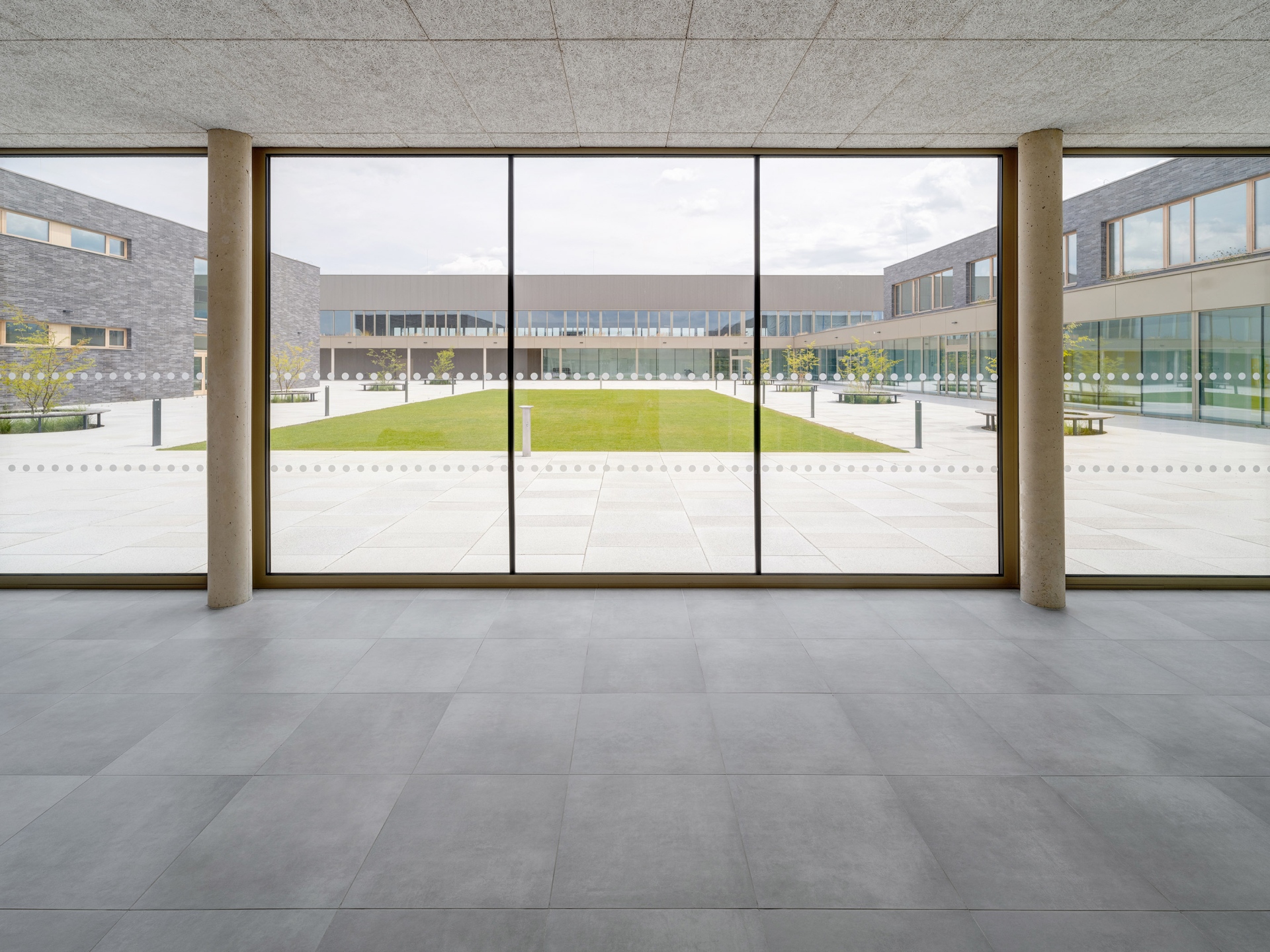
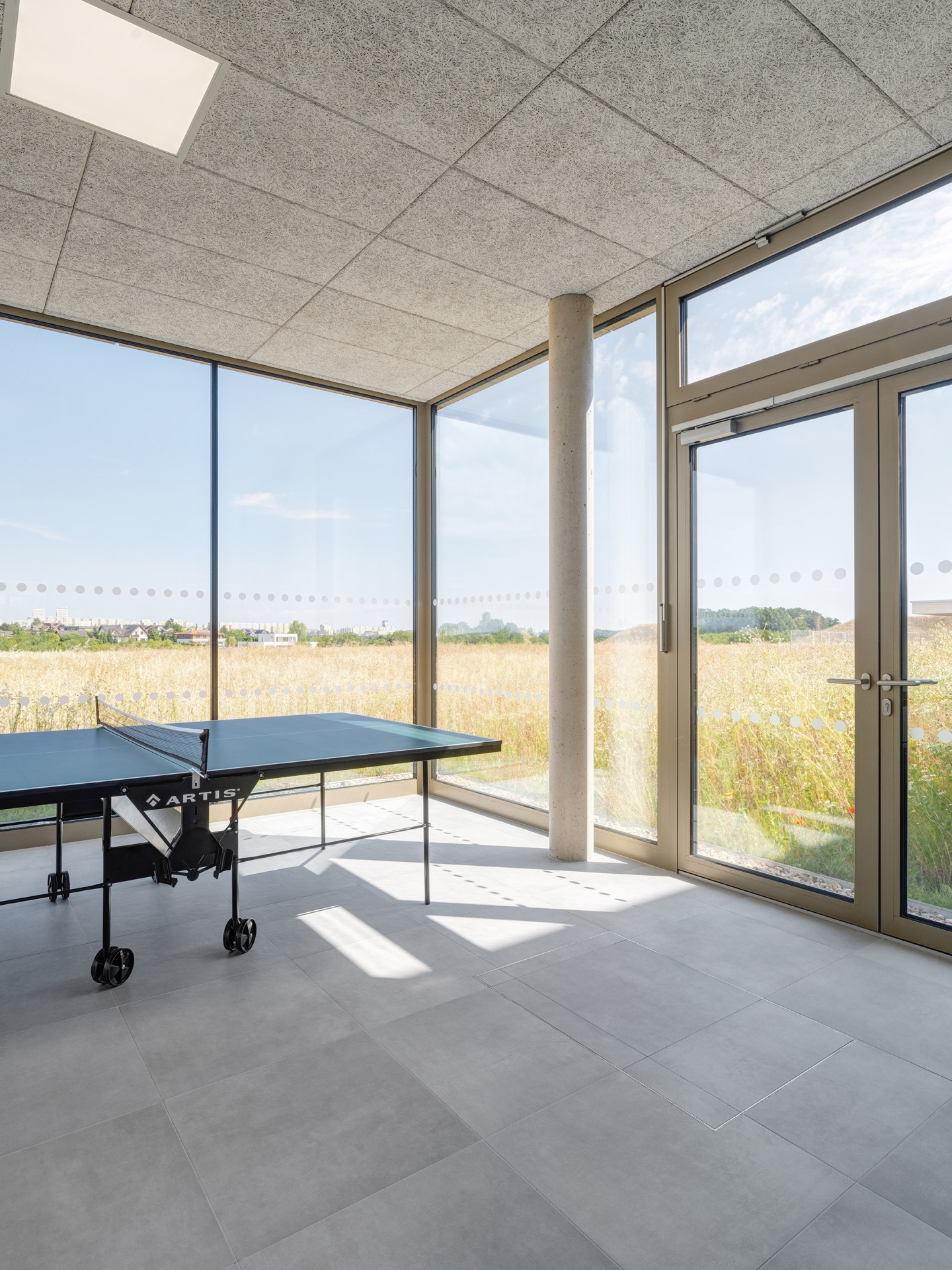
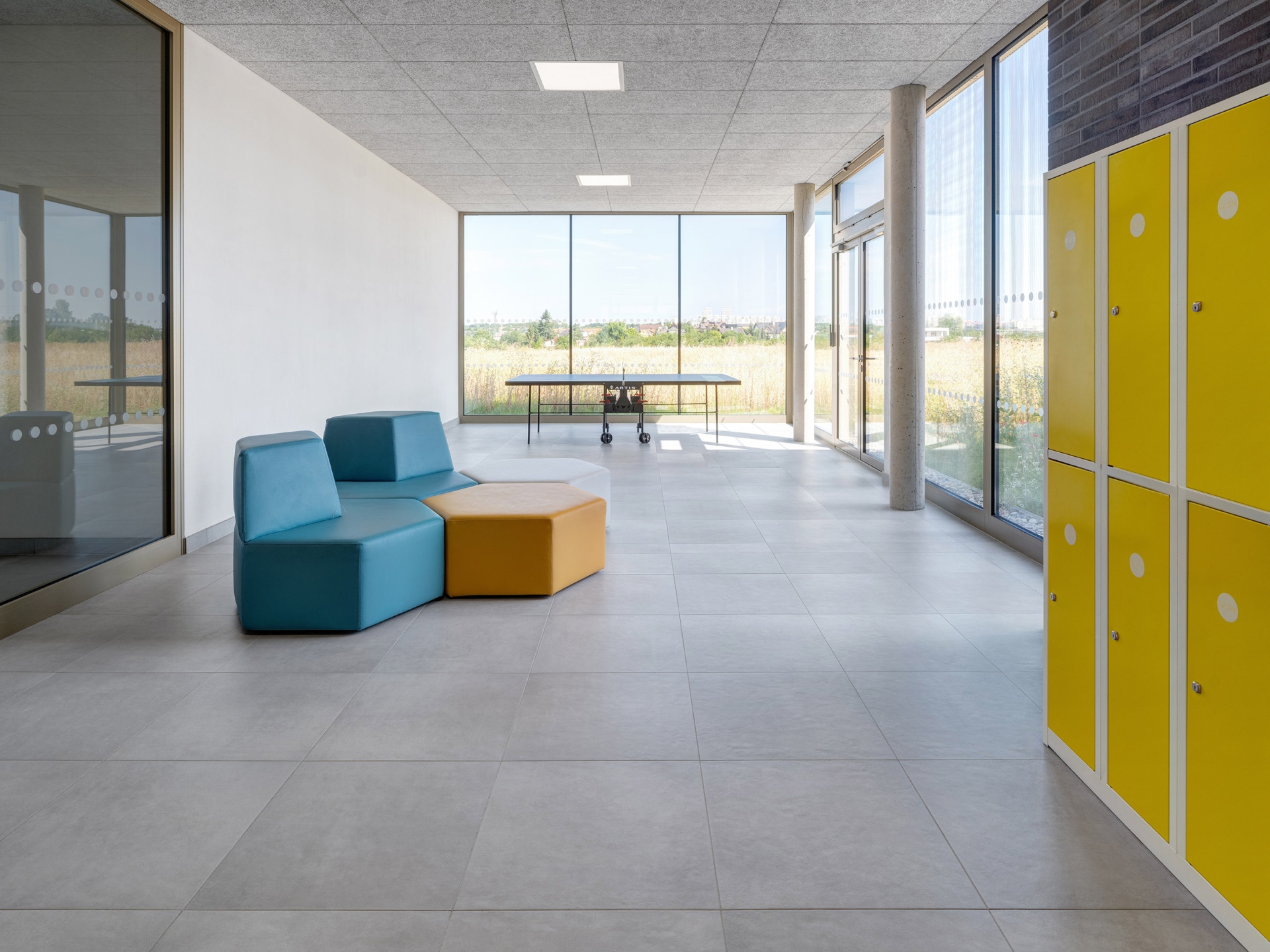
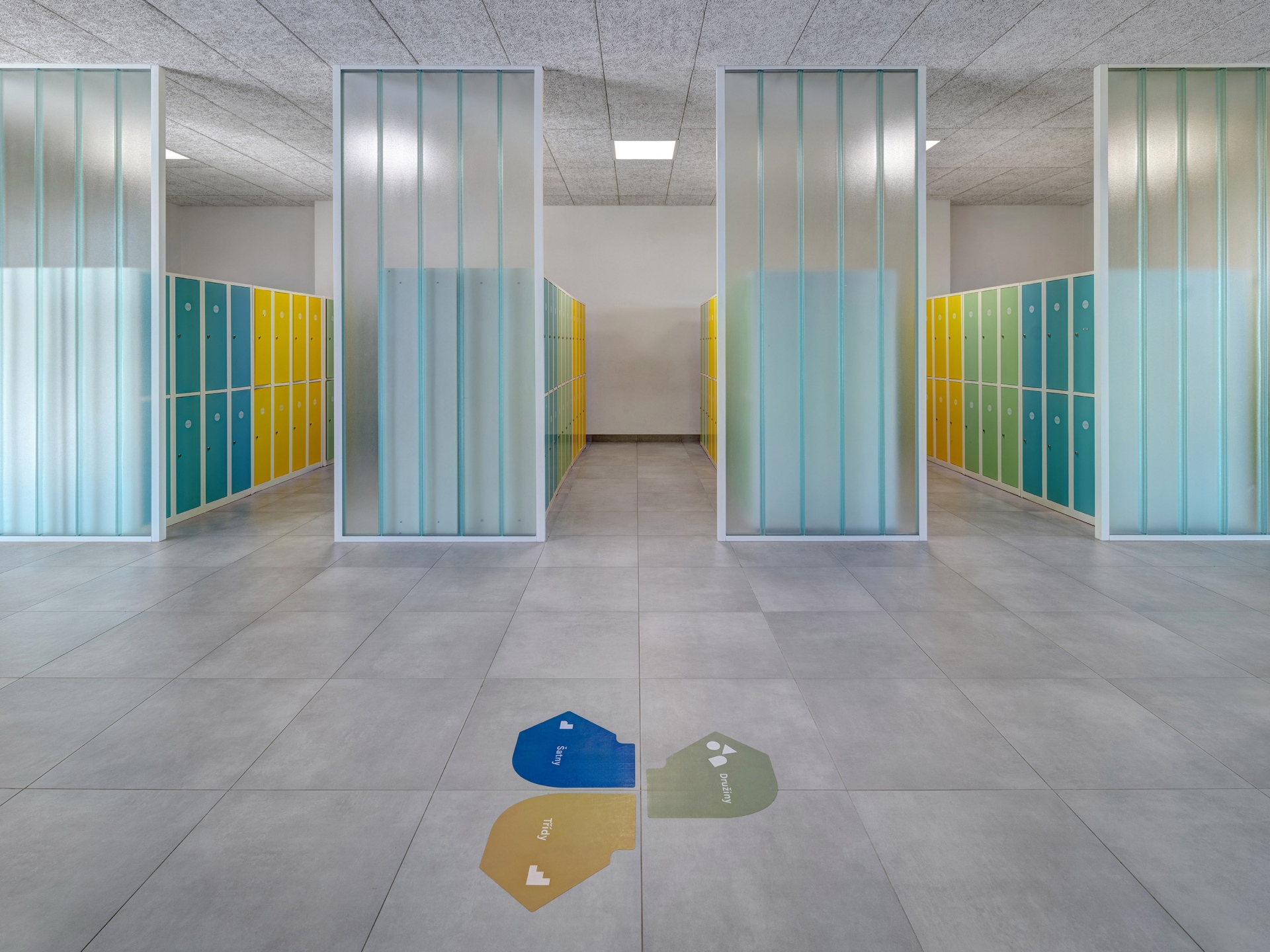
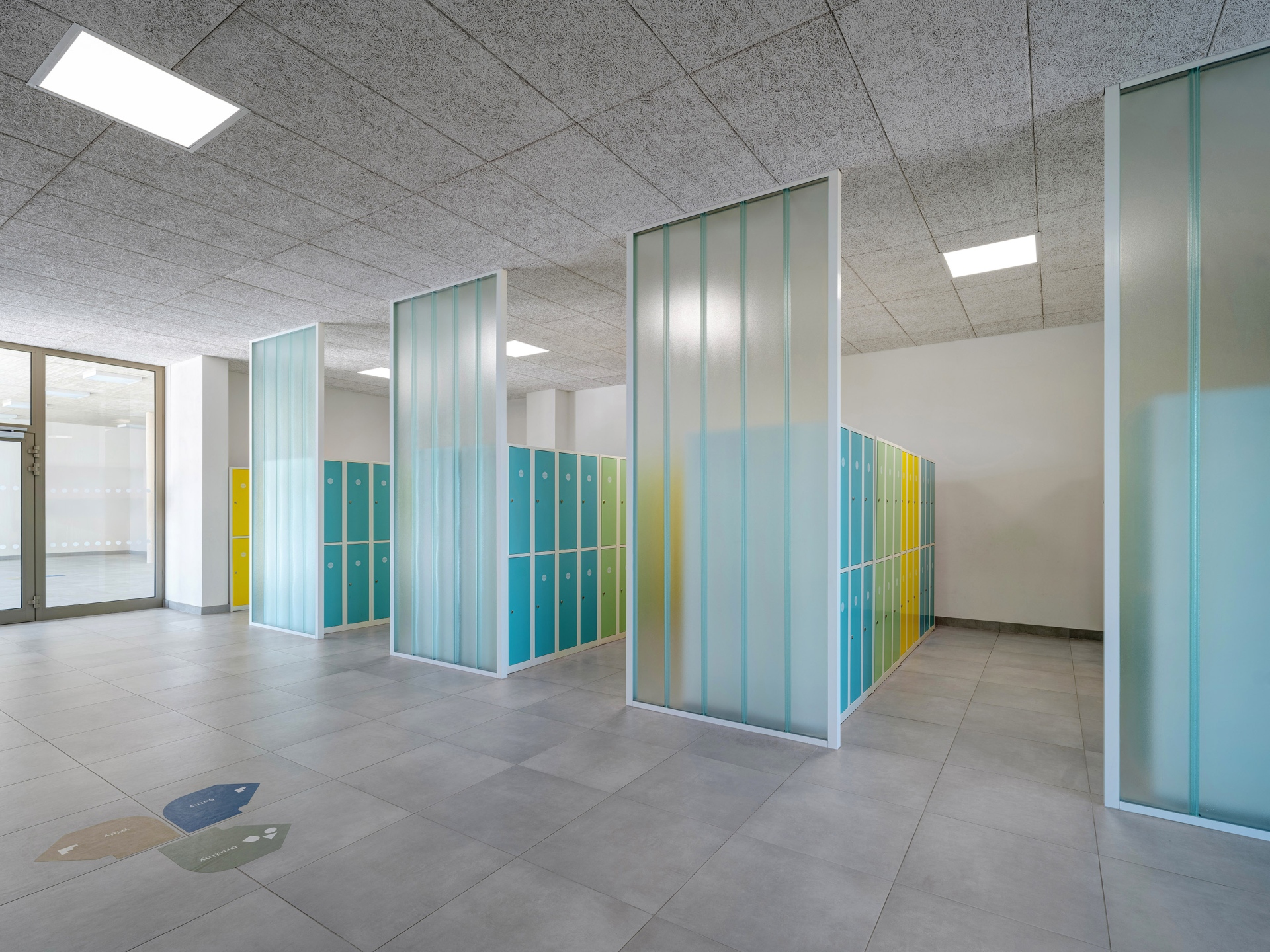
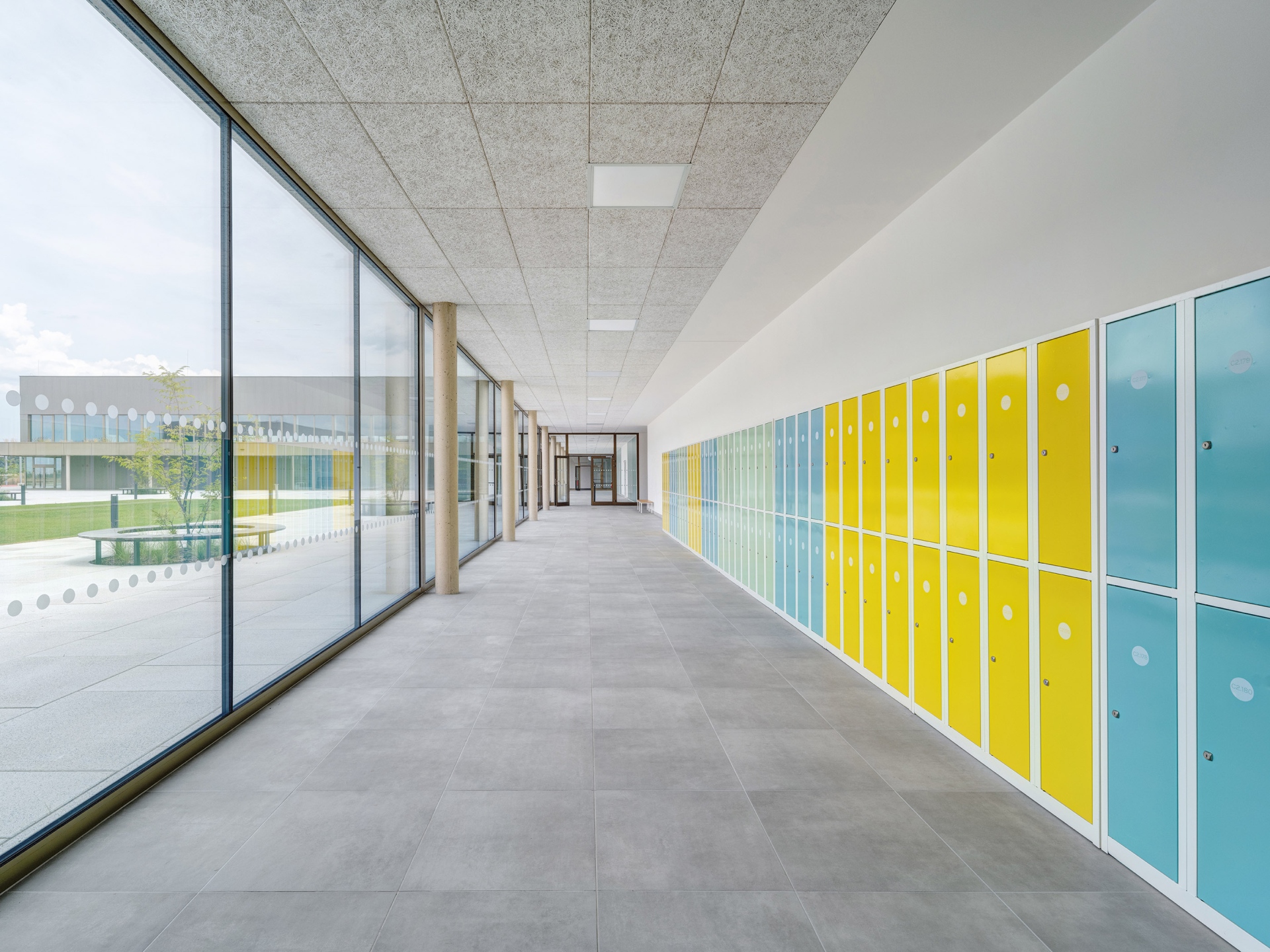
The multi-storey educational complex embodies the architectural style of the 21st century, but it also features traditional building elements and materials – glass copilit walls, exposed Heraklit (wood wool insulation boards) in the suspended ceilings and large-format ceramic tiles dominating the floor. The façade and shape of the building espouse its Functionalist roots. The co-author of the design answers the question as to whether this was the direct intention – to make that connection, to commemorate, to build on... “Yes, we definitely wanted to build on the good things brought by Czech modern architecture, while also drawing inspiration from abroad. The project was created in response to demographic growth in the outskirts of Prague and provides capacity for eighteen classrooms. The architectural design emphasises a functionally structured mass and high-quality public space."
Durable, safe and environmentally friendly tiles
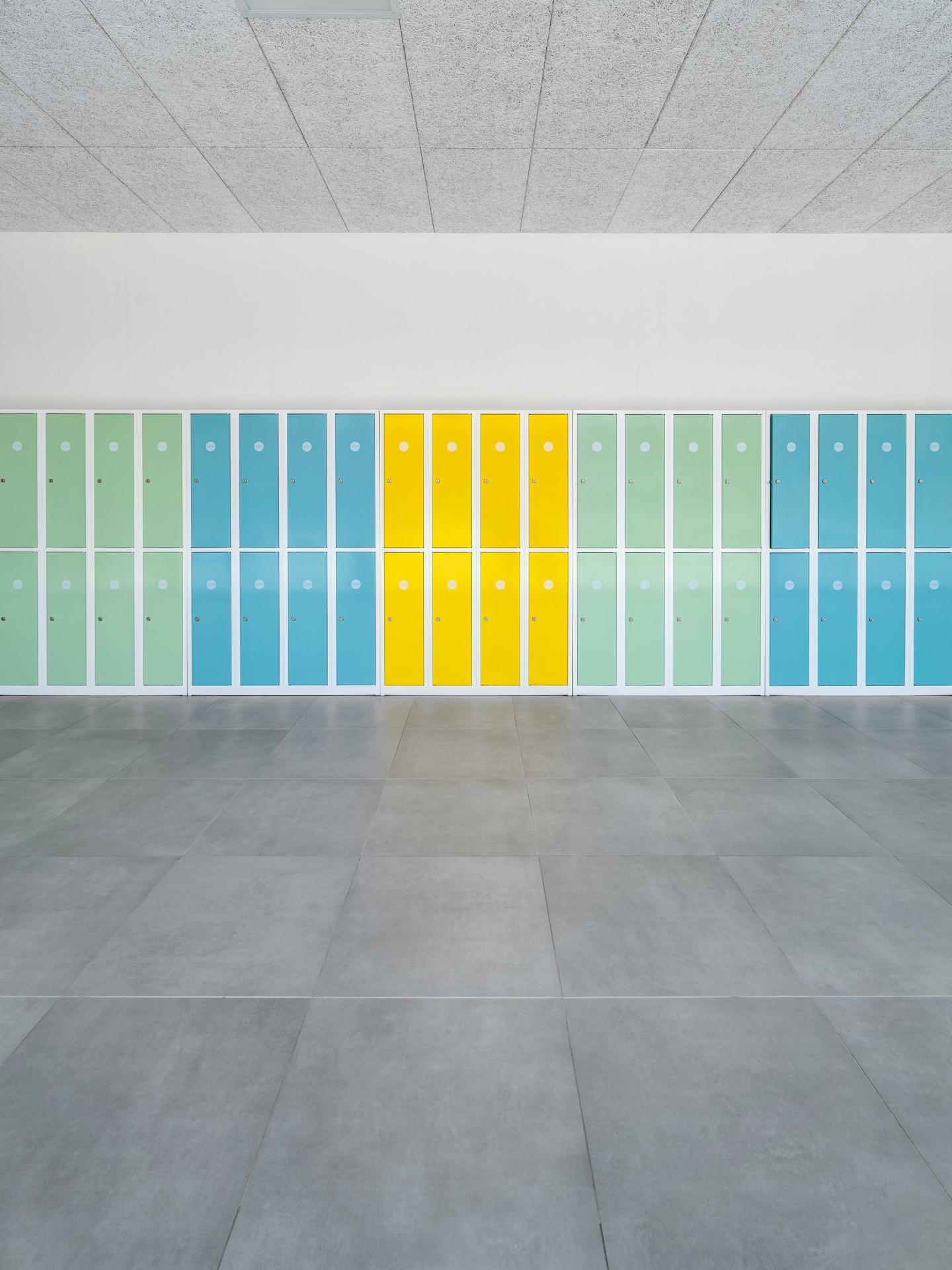
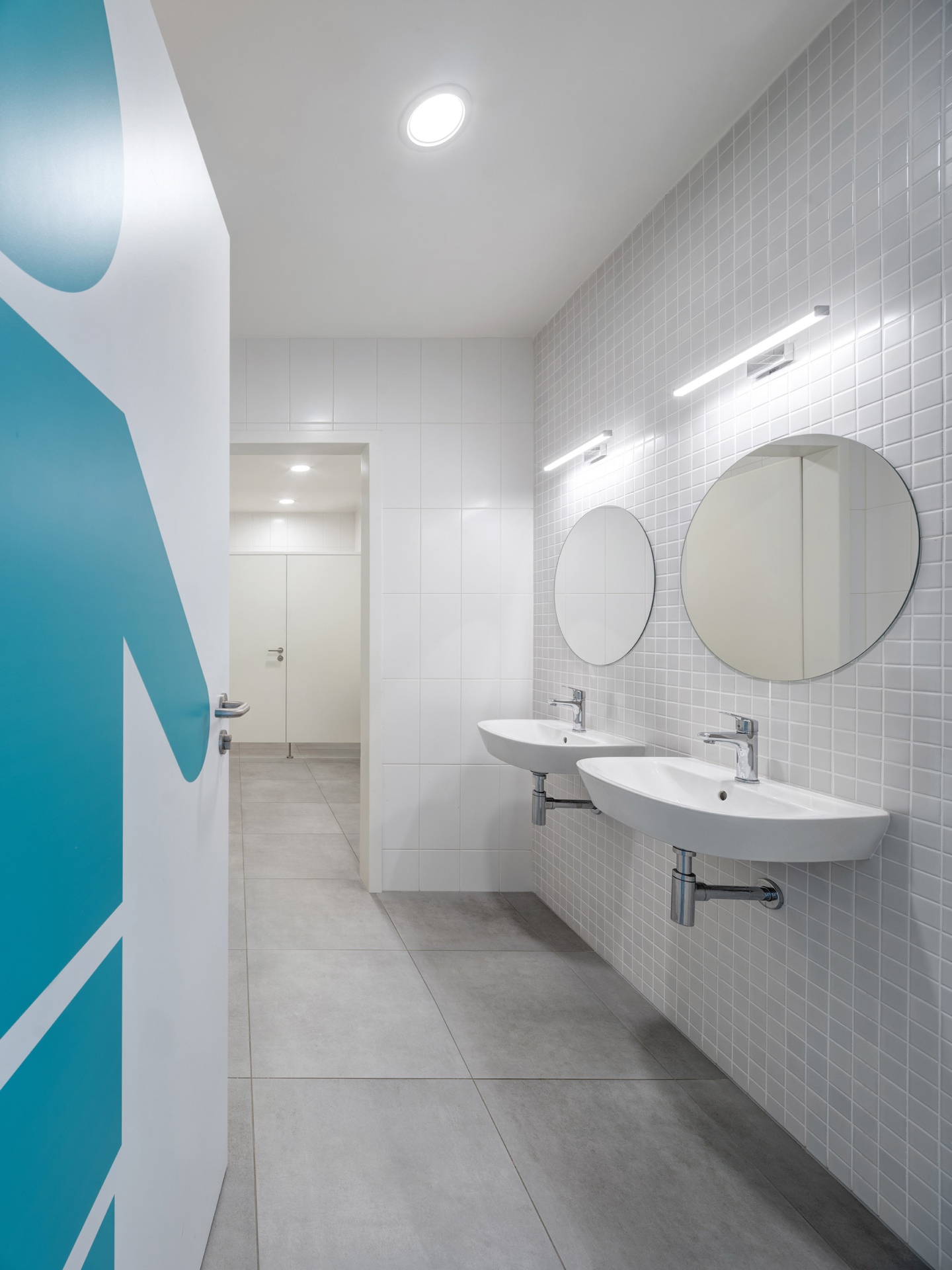
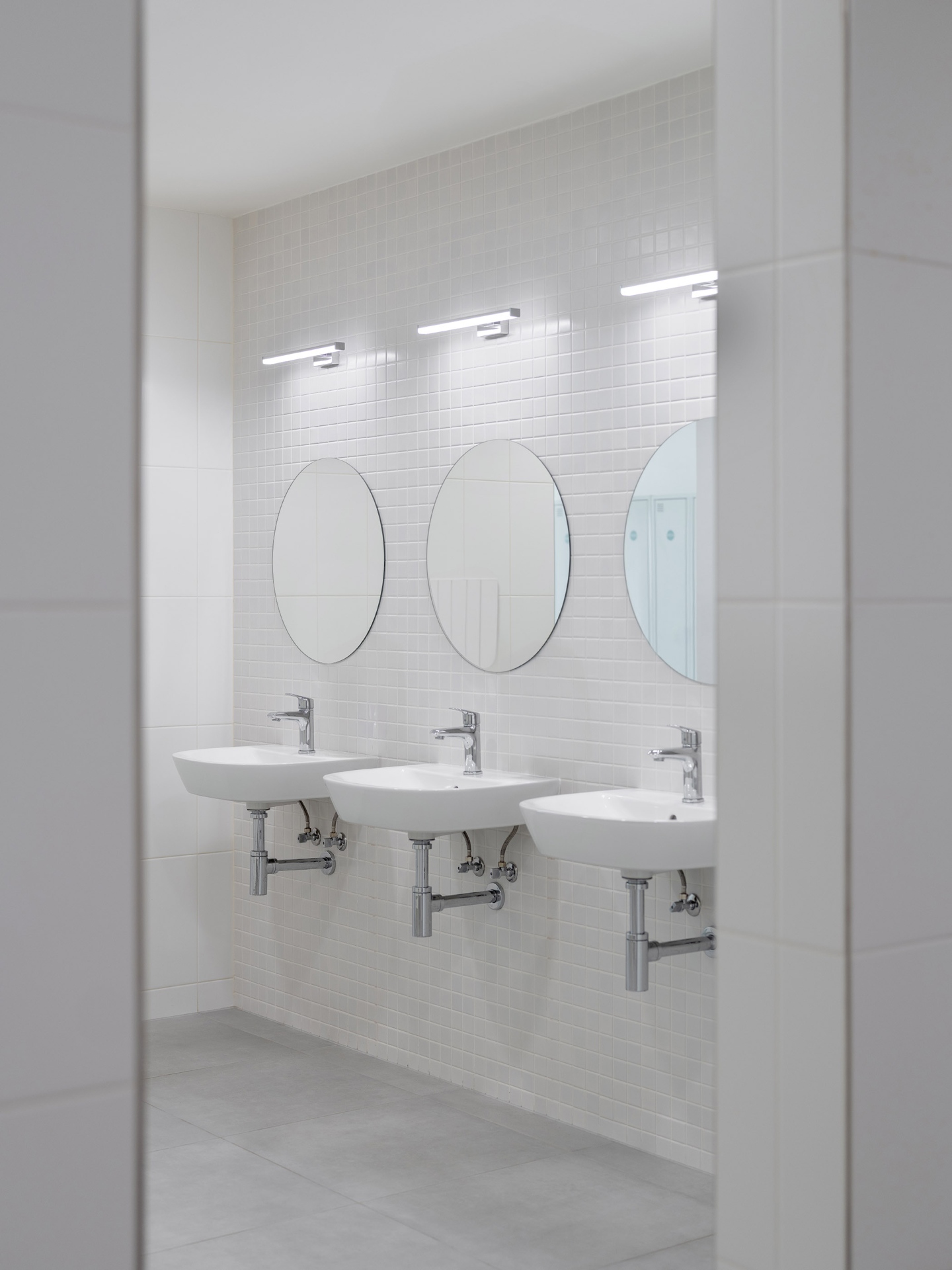
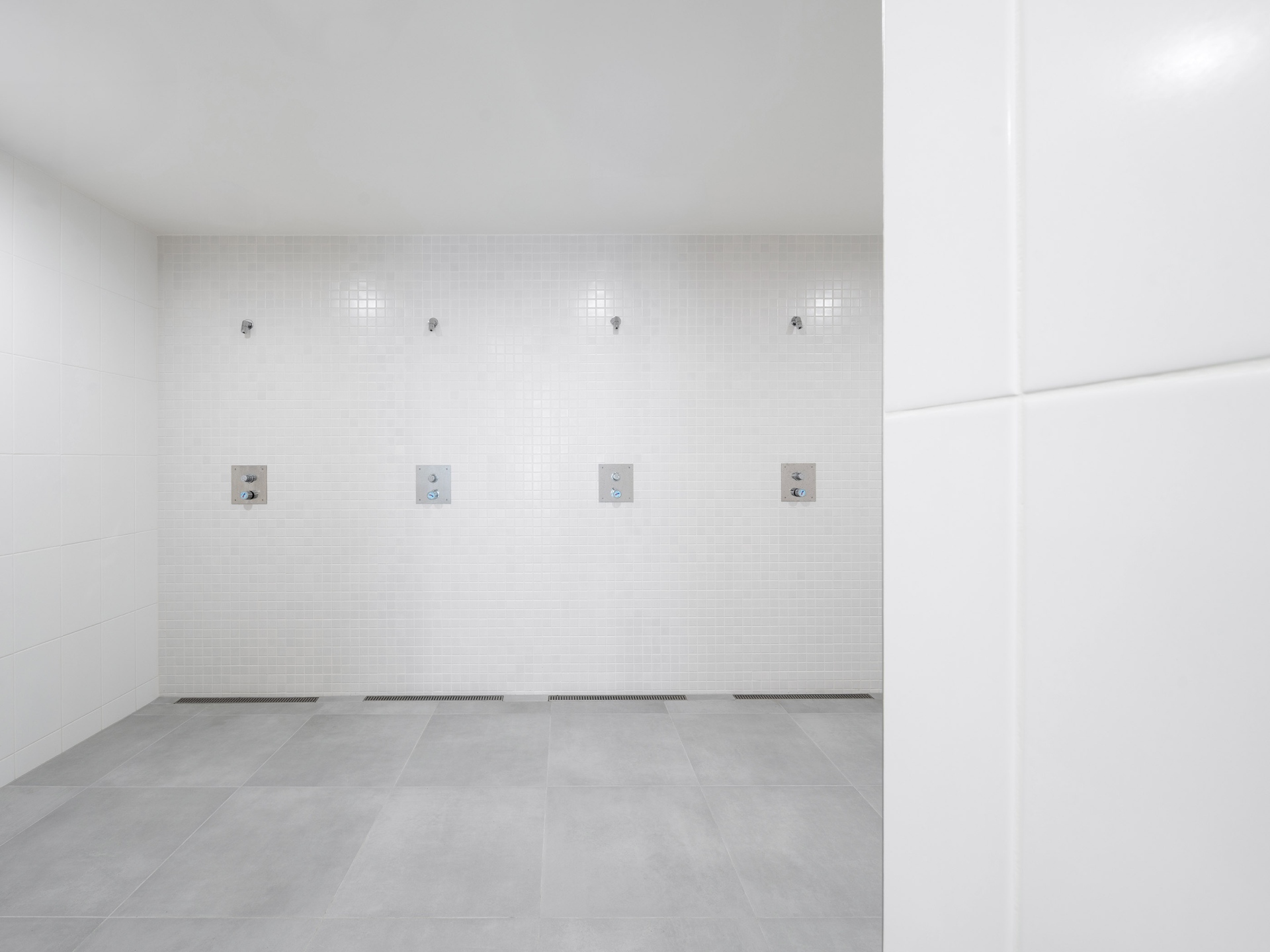
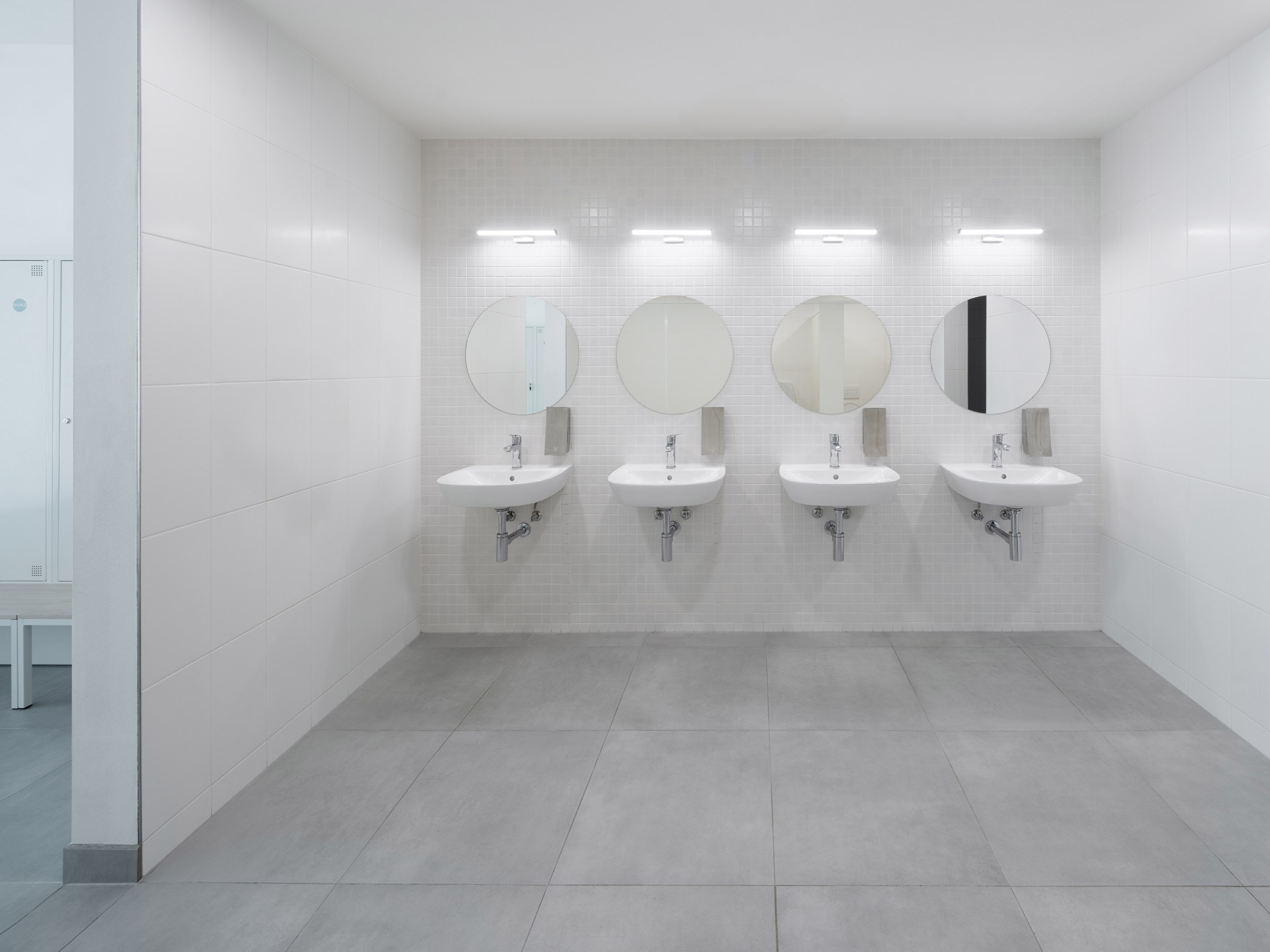
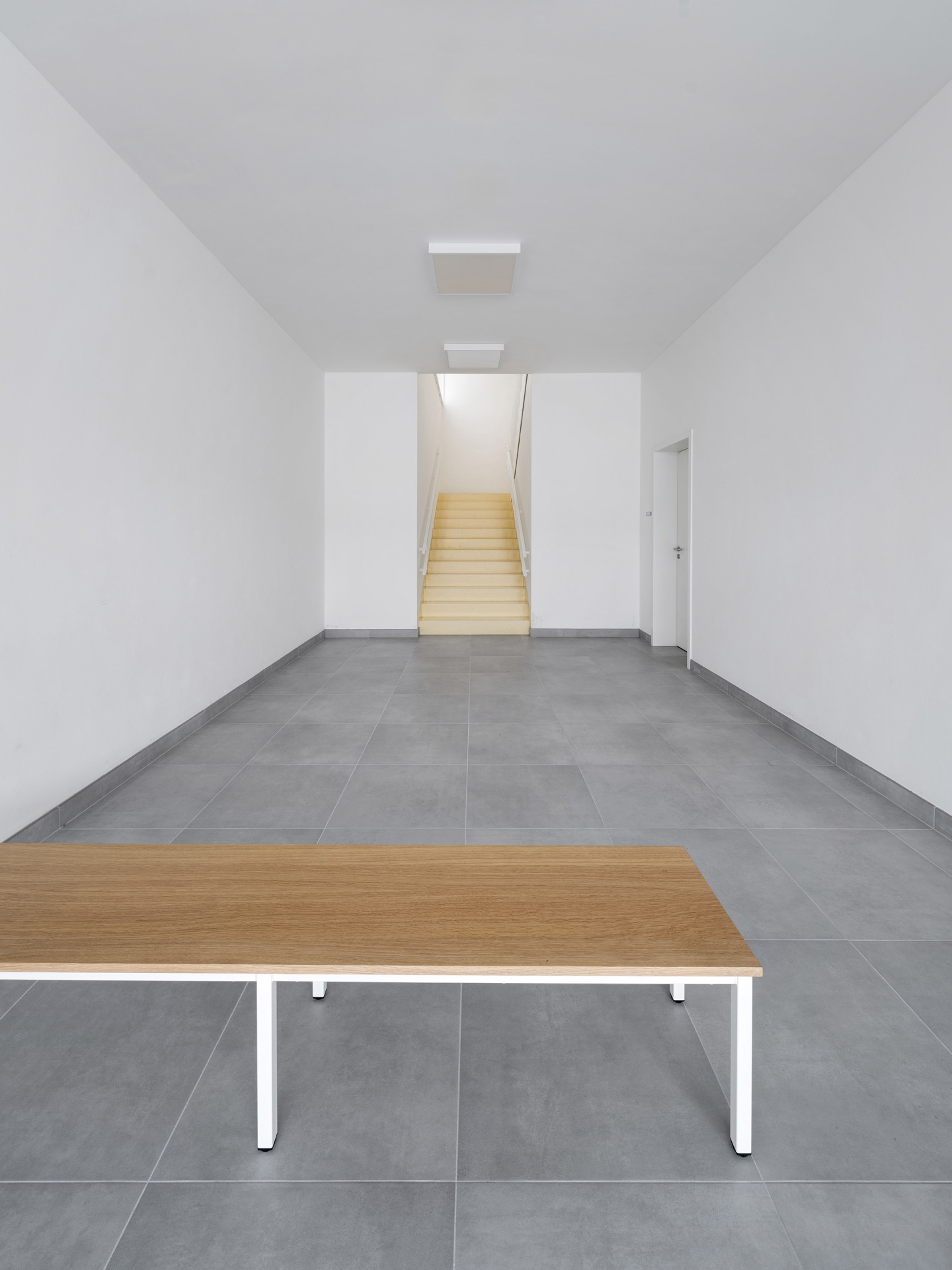
Ceramic tiles are undoubtedly a material that has been tried and proven true over generations. The Czech brand RAKO, with over 140 years of tradition, has a good reputation and confirms its quality both at home and abroad. Architect Lapka emphasised that the ADR studio has a practice of using RAKO ceramic tiles. If they are in need of service support or technical recommendations from Lasselsberger, they can reach out to the manufacturer at any time. The Extra-series large-format tiles were used for the most heavy-duty floors, while the sanitary facilities and catering areas were fitted with Colour One and Colour Two series tiles. “We chose the concrete-like Extra-series for several reasons – we like concrete screeds and exposed concrete in projects, and the optimal price was also a factor in our decision,” adds the architect.
The school principal adds: "I have known RAKO products since childhood. While it may not be so important for younger children, older students should be reminded of the tradition of domestic brands. The concrete look brings balance and a neutral background to the interior. The choice of colours and materials is not a mere attempt at ‘aesthetic education’, but also a serene lesson in how to appreciate one’s own environment. After a year of operation, the school still looks like new, which only goes to show we made the right call.”
Learning and living better
Architect Aleš Lapka took the opportunity to voice certain criticism regarding the situation in the construction of primary schools in our country compared to developed European countries: “Due to complex legislation, we are not doing very well. Since 1989, or rather since the Velvet Revolution, only two new primary schools have been built in the capital city of Prague! Both projects were designed by our office.” The approval process was long, but that meant that the latest trends in construction – materials, advanced technologies and sustainability – could be reflected in the appearance and functioning of the new building. It did not end with proclamations, but with a concrete solution, which the architect describes as follows: “The school is located near the Hrnčířské louky natural monument and builds on its character by emphasising environmental education and working with the surrounding landscape. Sustainability is therefore not just a technical parameter, but a natural part of the educational concept – children come across the principles of sustainable use of water, energy and space in their daily activities. The building uses a heat pump system, the water is ready in retention tanks for watering greenery, and screens and fawns ensure passive comfort. We also preferred ceramic products. The tiles are made of a natural material that is harmless to health and manufactured in this country. The technological solution emphasises low energy consumption in the school’s operation and simple maintenance. Long-term sustainability is easy to understand and, above all, easy to see for the users themselves – children, teachers and parents."
PROJECT INFORMATION:
Šeberov Primary School, K Hrnčířům Street, Prague
- School grounds: (bordering on the building and fence) 11,465 m2 Built-up area 7,050 m2
- Main contractor: Bomart s.r.o.
- Architectural design: ADR architectural studio
- (authors: Aleš Lapka, Martin Kuklík, Tereza Valošková)
- Developer: Prague City Hall
- Contractor: PKS stavby, Vistoria CZ
- Supplier: RAKO, MK 4,764 m² – Extra, Colour One and Colour Two series ceramic tiles, RAKO SYSTEM construction chemicals
Galeria zdjęć